

IEC | INDONESIA EXPORT CENTER
CONNECTING INDONESIAN PRODUCTS TO THE WORLD
PREMIUM INDONESIAN EXPORT PRODUCTS
Cocopeat Container Loading Capacity for International Buyers
Planning a bulk cocopeat shipment from Indonesia and need to estimate cocopeat container loading capacity?
Container planning is an important part of purchasing cocopeat for international distribution. The number of blocks, bales, or bags that can be loaded depends on product dimensions, compressed density, packaging, palletization, container specifications, and permitted cargo weight.
For distributors, importers, freight forwarders, and procurement teams, an accurate loading plan helps evaluate freight costs, cargo protection, unloading requirements, and landed cost per unit.
IEC | Indonesia Export Center facilitates sourcing and export enquiries for Indonesian products, including requests to evaluate cocopeat packaging and shipment requirements.
This guide explains how to assess cocopeat loading capacity, calculate estimated cargo quantities, and protect shipments against moisture and contamination.
Actual cocopeat availability, product specifications, packing configurations, and container loading quantities must be verified with the proposed supplier and freight provider.
Request a Cocopeat Container Loading Estimate
Contact IEC with:
- Cocopeat product type
- Block, bale, or bag dimensions
- Net weight per unit
- Packaging method
- Required quantity
- Preferred container size
- Destination port
- Palletized or floor-loaded preference
WhatsApp: +62 813-3302-277
Website: https://indonesiaexportcenter.com/
What Determines Cocopeat Container Loading Capacity?
Cocopeat container loading capacity is influenced by both the cargo and the shipping container.
The most important factors include:
- Cocopeat compression and density
- Weight per block or bale
- Dimensions of the packed product
- Outer packaging dimensions
- Container internal dimensions
- Container payload limit
- Palletization requirements
- Stacking and handling restrictions
- Moisture protection requirements
- Freight and destination regulations
A loading estimate should consider both volume and weight.
A container may reach its usable volume before reaching its weight limit, or vice versa.
20 ft vs 40 ft Container for Cocopeat
The following are approximate planning dimensions for common dry freight containers. Actual specifications vary by container manufacturer, operator, and equipment.
| Container Type | Approximate Internal Length | Approximate Internal Width | Approximate Internal Height | Approximate Internal Volume |
|---|---|---|---|---|
| 20 ft Standard Dry | 5.90 m | 2.35 m | 2.39 m | 33 m³ |
| 40 ft Standard Dry | 12.03 m | 2.35 m | 2.39 m | 67 m³ |
| 40 ft High Cube | 12.03 m | 2.35 m | 2.69 m | 76 m³ |
Important: Internal volume is not the same as usable cargo volume. Real loading must account for packaging, stacking gaps, door clearance, handling, and cargo protection.
Container payload limits must be checked against the actual container’s identification plate, shipping line requirements, road transport restrictions, and applicable verified gross mass procedures.
How to Calculate Cocopeat Container Loading Capacity
A practical estimate starts with the dimensions and weight of each packed unit.
Step 1 – Confirm Packed Unit Dimensions
Measure the product after compression and packaging.
For example, a hypothetical packed cocopeat block may measure:
- Length: 30 cm
- Width: 30 cm
- Height: 12 cm
These are illustrative dimensions only, not a verified IEC cocopeat product specification.
Step 2 – Calculate Unit Volume
Convert dimensions into meters:
0.30 m × 0.30 m × 0.12 m = 0.0108 m³ per unit
Step 3 – Estimate the Theoretical Volume-Based Quantity
For an illustrative 20 ft container with approximately 33 m³ internal volume:
33 ÷ 0.0108 = approximately 3,055 units
This is a mathematical volume-only estimate, not a practical loading commitment.
Step 4 – Check Cargo Weight
If each hypothetical packed unit weighs 5 kg:
3,055 × 5 kg = 15,275 kg
The result must be compared with the container’s permitted payload and transport limits.
Step 5 – Apply a Realistic Loading Layout
A practical loading plan must account for the actual orientation of the blocks, container dimensions, packaging, loading access, and any required clearances.
The final quantity may be materially lower than the theoretical volume-based figure.
Illustrative Cocopeat Loading Calculation
The following table shows volume-only calculations using the hypothetical 0.0108 m³ packed block.
| Container | Approximate Internal Volume | Theoretical Units by Volume | Theoretical Weight at 5 kg/Unit |
|---|---|---|---|
| 20 ft Standard | 33 m³ | 3,055 | 15,275 kg |
| 40 ft Standard | 67 m³ | 6,203 | 31,015 kg |
| 40 ft High Cube | 76 m³ | 7,037 | 35,185 kg |
These are not recommended or verified loading quantities. Theoretical weights may exceed the permitted payload of a particular container or transport route.
The actual shipment quantity must be limited by whichever constraint is reached first: physical loading geometry, safe stacking, permitted payload, or applicable transport restrictions.
Cocopeat Packaging Methods for Container Shipping
Different cocopeat products may require different packaging configurations.
Compressed Cocopeat Blocks
Compressed blocks may be considered where efficient storage and transport are important.
Buyers should confirm block dimensions, net weight, compression characteristics, and protective packaging.
Cocopeat Bales
Baled cocopeat may be evaluated for larger-volume agricultural or growing-media requirements.
Actual bale dimensions and weights must be verified.
Bagged Cocopeat
Bagged products may be suitable for particular distribution or retail channels.
Packaging dimensions and stacking behavior influence loading efficiency.
Palletized Cocopeat
Palletization may simplify handling and unloading, depending on the receiving facility.
However, pallets consume container space and add weight.
Floor-Loaded Cocopeat
Floor loading may be evaluated when suitable for the product and logistics arrangement.
It requires an appropriate loading and unloading plan.
No specific IEC cocopeat block size, bale size, bag format, or pallet configuration has been verified as available.
Palletized vs Floor-Loaded Cocopeat
| Consideration | Palletized Cargo | Floor-Loaded Cargo |
|---|---|---|
| Handling | May support mechanical handling | May require additional unloading labor or equipment |
| Space Efficiency | Pallets occupy space | May permit more flexible use of floor area |
| Cargo Protection | Depends on pallet and wrapping quality | Depends on stacking and protective measures |
| Unloading | Often more structured | Requires a suitable unloading plan |
| Cost | Includes pallet-related costs | May involve different labor costs |
| Best Choice | Depends on buyer requirements | Depends on buyer requirements |
Neither method is automatically superior.
The choice should be based on cargo characteristics, handling equipment, destination requirements, and total logistics cost.
Protecting Cocopeat from Moisture During Shipping
Cocopeat shipments should be protected against unwanted moisture exposure.
Excessive moisture can affect packaging integrity, cargo condition, and buyer acceptance.
Container Inspection
Before loading, inspect the container for:
- Water ingress
- Visible holes or damaged panels
- Wet or contaminated flooring
- Damaged door seals
- Residual cargo
- Unusual odors
Dry Packaging
Confirm that the product and packaging meet the agreed moisture requirements before loading.
Suitable Protective Materials
Where appropriate, the loading plan may include suitable liners, wrapping, or other protective materials.
Condensation Risk
Temperature changes during transit can contribute to condensation.
The freight plan should consider cargo moisture, container conditions, route, and appropriate moisture-control measures.
Desiccant Use
Container desiccants may be considered where suitable, but their selection and quantity should follow an appropriate assessment.
Desiccants are not a substitute for dry cargo, sound packaging, or a watertight container.
Preventing Cocopeat Contamination
Contamination control is important for buyers using cocopeat in horticulture, growing media, or other applications.
Clean Loading Area
Load cargo in an area protected from unnecessary dust, debris, chemicals, and other contaminants.
Container Cleanliness
Confirm that the container is suitable for the cargo before loading.
Packaging Integrity
Inspect packaging for tears, punctures, and inadequate sealing.
Separation from Other Cargo
Avoid incompatible mixed loads unless appropriate separation and protection have been established.
Foreign Matter Control
Agree on the relevant product cleanliness requirements with the supplier.
Traceability
Identify the production lot and maintain records linking the cargo to the shipment.
Loading Documentation
Photographs and inspection records may help document cargo condition and loading arrangements.
Cocopeat Quality Specifications to Verify Before Loading
Container capacity is only one part of a cocopeat purchasing decision.
Buyers should also verify product quality.
Depending on the intended use, relevant parameters may include:
| Parameter | Buyer Verification |
|---|---|
| Product Type | Cocopeat, coco coir, or other specified grade |
| Block or Bale Weight | Confirm actual net weight |
| Packed Dimensions | Confirm measurements |
| Moisture Content | Request test result and agreed limit |
| Electrical Conductivity (EC) | Request relevant result and test method |
| pH | Request relevant result and method |
| Particle Size | Confirm product grade |
| Expansion Volume | Request appropriate test information |
| Foreign Matter | Confirm acceptance criteria |
| Salt Content | Request relevant information where required |
| Packaging | Confirm type and integrity |
| Lot Traceability | Confirm lot identification |
No actual cocopeat quality results, product specification, or COA has been supplied for this page.
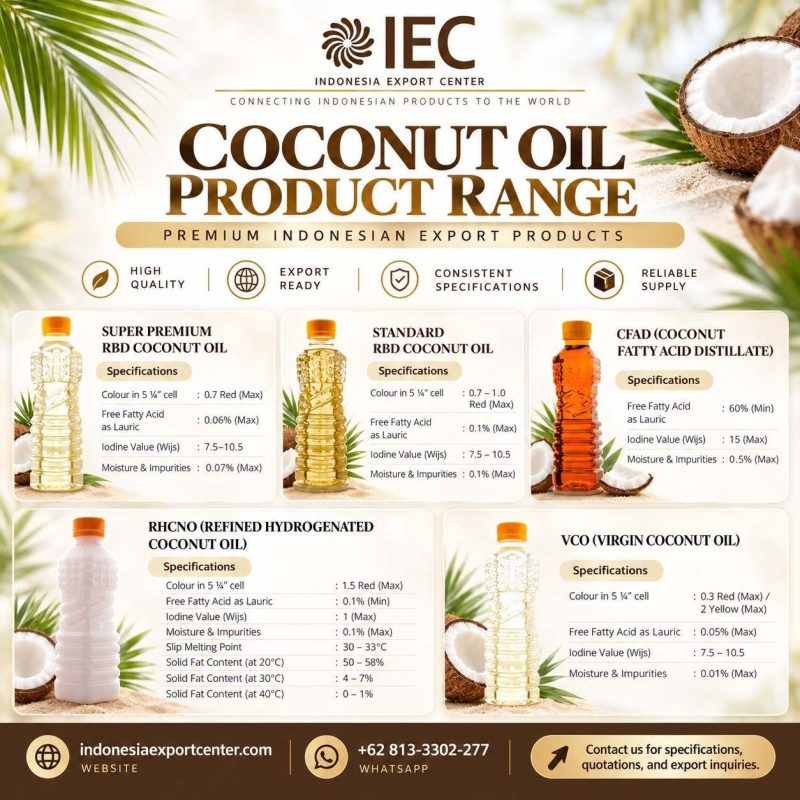
The coconut oil specifications provided separately are not cocopeat specifications and should not be used to describe cocopeat quality.
Container Loading Checklist for Cocopeat Export
Before loading:
-
Confirm actual cocopeat product specifications
-
Verify packed unit dimensions
-
Confirm net and gross weight per unit
-
Verify total planned cargo weight
-
Confirm container type
-
Check actual container payload limit
-
Check road and transport restrictions
-
Inspect container cleanliness
-
Inspect for water ingress
-
Confirm packaging condition
-
Review moisture-control measures
-
Confirm palletization or floor-loading method
-
Prepare a practical stacking plan
-
Verify cargo securing requirements
-
Record loading quantities
-
Obtain loading photographs where appropriate
-
Confirm container seal details
-
Complete required shipping documentation
How Container Loading Affects Cocopeat Landed Cost
For distributors and importers, loading efficiency can influence the cost per block, bale, bag, or metric ton delivered.
Freight Cost per Unit
If more acceptable units can be safely loaded, the freight cost per unit may decrease.
Packaging Cost
Additional protective materials and pallets may increase cost but can help manage handling and cargo risks.
Unloading Cost
Floor-loaded and palletized cargo may involve different labor and equipment requirements.
Cargo Damage Risk
A loading plan should prioritize cargo integrity rather than maximizing quantity at any cost.
Destination Charges
Port handling, inland transport, storage, and customs-related charges may affect total landed cost.
Simple Freight Cost Formula
Estimated Freight Cost per Unit = Total Applicable Freight Cost ÷ Number of Accepted Units Shipped
For procurement comparisons, buyers should use the same cost basis and account for differences in product weight, quality, and packaging.
Export Documentation for Cocopeat Shipments
Depending on the product, destination, and transaction, buyers may require:
- Commercial invoice
- Packing list
- Bill of lading
- Certificate of Origin
- Product specification
- Certificate of Analysis, where applicable
- Relevant inspection documents
- Applicable phytosanitary or other regulatory documentation
- Verified Gross Mass information
- Other destination-specific import documents
Phytosanitary and other import requirements depend on the actual product classification and destination market. Buyers should confirm the applicable rules before shipment.
Request a Cocopeat Container Loading Estimate
Subject: RFQ – Cocopeat Container Loading Capacity and Export Supply
Dear IEC | Indonesia Export Center Team,
We are interested in sourcing cocopeat from Indonesia and would like to evaluate the container loading capacity, packaging configuration, and export quotation.
Please advise whether a suitable supplier can provide the required product and supporting information.
BUYER INFORMATION
Company Name: [Company Name] Country: [Country] Business Type: [Importer / Distributor / Growing Media Supplier / Other] Contact Person: [Name] Email: [Email] WhatsApp: [Number]
PRODUCT REQUIREMENTS
Product: Cocopeat
Intended Application: [Specify]
Product Form: [Compressed Block / Bale / Bag / Other]
Required Quantity: [Units / MT]
Order Frequency: [Trial / One-Time / Monthly / Other]
PRODUCT AND PACKAGING DETAILS
Requested Unit Weight: [kg] Requested Packed Dimensions: [cm] Preferred Packaging: [Specify] Palletized or Floor-Loaded: [Specify] Additional Quality Requirements: [Specify]
CONTAINER REQUIREMENTS
Preferred Container: [20 ft / 40 ft / 40 ft High Cube] Destination Country: [Country] Destination Port: [Port] Requested Incoterm: [FCA / FOB / CFR / CIF / CIP / Other] Target Shipment Period: [Month / Year]
INFORMATION REQUESTED
Please provide, where available:
- Actual product specification
- Unit weight and dimensions
- Product quality documentation
- Packaging configuration
- Estimated units per container
- Estimated net cargo weight
- Estimated gross cargo weight
- Proposed loading method
- Moisture protection measures
- Contamination prevention measures
- Loading photographs or diagrams, if available
- MOQ
- Available quantity
- Price per unit or MT
- Shipping quotation
- Production and shipment lead time
Thank you. We look forward to reviewing the proposed loading plan and commercial offer.
Kind regards,
[Your Name] [Company Name] [Country]SEND YOUR COCOPEAT ENQUIRY VIA WHATSAPP
Frequently Asked Questions – Cocopeat Container Loading Capacity
How much cocopeat fits in a 20 ft container?
The actual quantity depends on packed dimensions, weight, stacking, container payload, and packaging. A verified loading plan is required.
How much cocopeat fits in a 40 ft container?
Capacity depends on the same factors and should be calculated for the actual product and container.
Is a 40 ft container always better for cocopeat?
Not necessarily. The best option depends on cargo density, freight rates, permitted weight, and handling requirements.
What is the difference between a 40 ft standard and 40 ft high cube container?
A high cube container provides additional internal height, which may be useful for some cargo configurations.
Does palletization reduce loading capacity?
Pallets occupy space and add weight, but may improve handling efficiency.
Can cocopeat be floor-loaded?
Floor loading may be considered where suitable and supported by an appropriate handling and securing plan.
How do I prevent moisture damage?
Use dry cargo, suitable packaging, a sound container, and appropriate moisture-control measures.
Can desiccants eliminate container condensation?
No. Desiccants may help manage moisture in suitable situations but do not eliminate all condensation risks.
Should cocopeat be tested before shipment?
Buyers should define appropriate quality requirements and request relevant test results.
Is a COA available?
Availability must be confirmed with the actual supplier.
What is the MOQ for cocopeat?
No fixed MOQ has been verified.
Can I request loading photographs?
Yes, as an enquiry. Availability must be confirmed.
Can I request a CIF quotation?
Yes. Provide the destination port and required quantity.
Does IEC guarantee a specific container loading quantity?
No. Actual loading capacity must be verified for the proposed cargo and container.
Plan Your Cocopeat Shipment with Accurate Loading Information
Understanding cocopeat container loading capacity helps importers and distributors evaluate freight efficiency, packaging requirements, and cargo protection.
However, the most useful loading estimate is based on the actual product’s packed dimensions, weight, quality requirements, and a verified container loading plan.
IEC | INDONESIA EXPORT CENTER
CONNECTING INDONESIAN PRODUCTS TO THE WORLD
Product: Cocopeat
Page Focus: Container Loading Capacity and Export Packing
Proposed Sourcing Country: Indonesia
Target Market: Global
Target Buyers: Importers, Distributors, Freight Teams, and Procurement Professionals
Product Specification: To Be Verified
COA: To Be Requested and Verified
Packed Unit Dimensions: To Be Confirmed
Unit Weight: To Be Confirmed
Container Loading Capacity: To Be Calculated and Verified
Packaging: To Be Confirmed
MOQ: To Be Confirmed
Available Quantity: To Be Confirmed
Price: Request Quotation
Shipment Lead Time: To Be Confirmed
Request Cocopeat Loading Capacity and Export Quotation
Website: https://indonesiaexportcenter.com/
WhatsApp: +62 813-3302-277
REQUEST COCOPEAT CONTAINER LOADING ESTIMATE
Contact us for specifications, quotations, and export inquiries.
Loading, Quality, and Commercial Disclaimer: This guide provides general information and illustrative calculations for cocopeat container loading. Container dimensions and volumes are approximate, while example block dimensions, weights, and calculated quantities are hypothetical. They do not represent verified IEC supplier specifications, safe loading recommendations, or guaranteed shipment capacities. No actual cocopeat manufacturer, COA, stock, MOQ, packaging configuration, price, loading quantity, or shipment lead time has been independently verified. Buyers and freight providers should confirm actual container specifications, permitted payload, transport restrictions, cargo securing, packaging, and destination-market requirements before shipment. IEC facilitates sourcing and export enquiries; the actual manufacturer, contractual seller, and exporter of record must be confirmed for each transaction.
