

INDONESIA EXPORT CENTER
BANANA QUALITY AND MATURITY GUIDE
CAVENDISH BANANA MATURITY FOR EXPORT
Mature-Green Stage | Harvest Criteria | Ripening Performance | Inspection | Buyer Acceptance
Introduction
Harvest maturity is one of the most important quality factors in international Cavendish banana trade.
Bananas must be sufficiently developed to ripen properly while remaining suitable for the intended transportation and distribution period.
International buyers evaluating Cavendish banana maturity for export should establish measurable criteria rather than relying only on informal descriptions.
Indonesia Export Center helps buyers communicate maturity requirements to potential Indonesian suppliers.
1. What Is Banana Maturity?
Banana maturity refers to the physiological development of the fruit.
It differs from ripeness, which describes the progression toward eating quality.
A banana may be mature enough to ripen normally while still having a green peel.
2. Maturity vs. Ripeness
| Concept | Meaning |
|---|---|
| Physiological Maturity | Development stage affecting the fruit’s ability to ripen |
| Ripeness | Progression toward consumption quality |
| Green Color | External appearance, not a complete maturity measure |
| Harvest Stage | Condition at which the fruit is harvested |
| Ripening Stage | Condition during or after ripening |
3. Why Maturity Matters for Export
Incorrect harvest maturity may contribute to:
- Poor ripening
- Uneven color development
- Reduced eating quality
- Premature ripening
- Increased losses
- Shortened distribution window
4. Understanding the Advertised 30% Maturity Claim
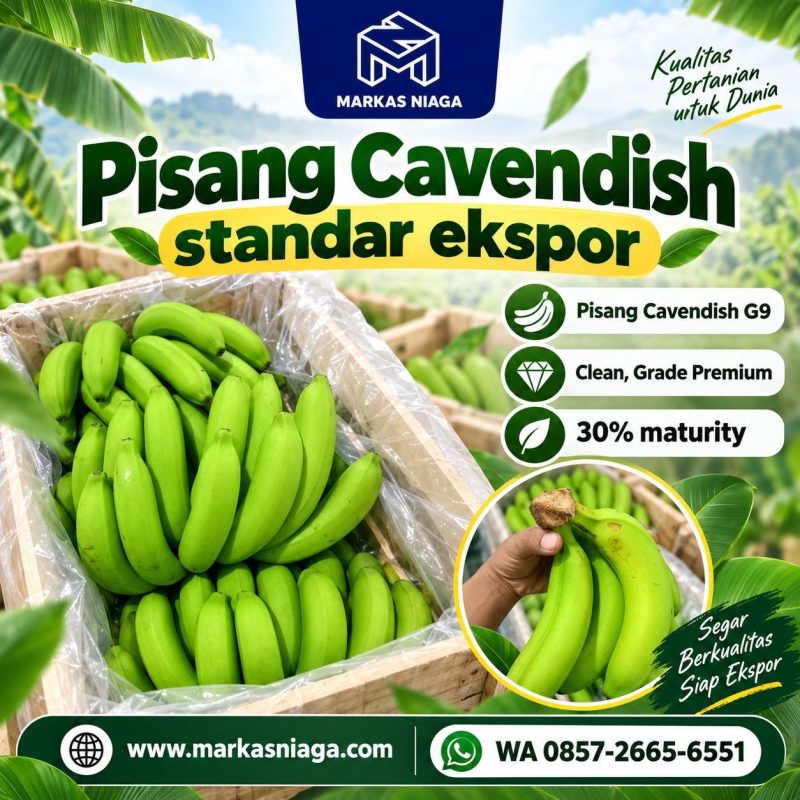
Some commercial materials describe Cavendish G9 bananas as having 30% maturity.
However, the term is ambiguous without a defined measurement method.
It should not automatically be interpreted as an internationally recognized export maturity grade.
5. Questions Buyers Should Ask
Before accepting a 30% maturity claim, ask:
- What exactly does 30% represent?
- Is it based on fruit age, development, fullness, or another measure?
- How is it measured?
- What reference standard is used?
- Is it appropriate for the proposed transit time?
- Are inspection records available?
- Has ripening performance been evaluated?
6. Common Maturity Assessment Approaches
Depending on the production system, maturity assessment may consider:
- Fruit age
- Finger fullness
- Fruit angularity
- Diameter
- Length
- Pulp characteristics
- Firmness
- Other validated indicators
No single method should be assumed to apply universally.
7. Finger Fullness
Fruit shape and fullness may help indicate development, but assessment should follow an agreed method.
8. Fruit Angularity
Changes in fruit angularity can be relevant to maturity evaluation.
9. Fruit Size
Size measurements may support maturity assessment but do not establish maturity by themselves.
10. Green Peel Color
Green peel color is common for bananas intended for later ripening.
It should be assessed together with other indicators.
11. Transit Duration
Longer transit times may require different planning from short-distance shipments.
12. Temperature and Maturity
Maturity and temperature management must be considered together.
Unsuitable temperature exposure may affect fruit condition and ripening performance.
13. Ripening Program Compatibility
Importers should confirm that the fruit is appropriate for the destination’s ripening procedures.
14. Sample Ripening Evaluation
Where practical, buyers may arrange representative samples to evaluate:
- Ripening consistency
- Color development
- Texture
- Appearance
- Eating quality
15. Maturity Inspection Records
Potential records include:
- Harvest date
- Maturity assessment
- Sampling results
- Packing date
- Lot identification
- Inspector details
16. Buyer Acceptance Criteria
A purchase specification should state:
- Required harvest stage
- Assessment method
- Sampling method
- Acceptable tolerance
- Inspection timing
- Rejection criteria
17. Maturity Specification Template
| Requirement | Buyer Specification |
|---|---|
| Product | Cavendish Banana |
| Cultivar | |
| Green Color Stage | |
| Physiological Maturity | |
| Assessment Method | |
| Finger Fullness | |
| Fruit Size | |
| Transit Duration | |
| Ripening Requirements | |
| Acceptance Tolerance |
18. Common Maturity Mistakes
Avoid:
- Treating peel color as the only indicator
- Using undefined percentages
- Ignoring transit duration
- Failing to agree on inspection methods
- Assuming all cultivars behave identically
19. Supplier Verification
Buyers should request the supplier’s harvest maturity criteria and relevant quality records.
20. Frequently Asked Questions
Is 30% maturity an official Cavendish export standard?
Not as a universal standalone specification. The measurement must be defined.
Are green bananas always suitable for export?
No. Green appearance alone does not establish physiological maturity.
Can bananas ripen after arrival?
Yes, when harvested at an appropriate stage and handled correctly.
Can IEC guarantee ripening performance?
No. Performance depends on the actual fruit and supply chain.
Request Cavendish Banana Maturity Specifications
INDONESIA EXPORT CENTER
Cavendish G9 | Harvest Maturity | International Buyer Specifications
Website: https://indonesiaexportcenter.com/
Supplier Page: https://indonesiaexportcenter.com/indonesian-cavendish-banana-supplier/
WhatsApp: +62 813-3302-277
Send your destination, transit duration, required maturity criteria, fruit size, quantity, and ripening requirements.
Disclaimer: Maturity criteria must be validated for the actual product and shipment. IEC does not certify supplier maturity claims.
