

INDONESIA EXPORT CENTER
CAVENDISH BANANA EXPORT RISK MANAGEMENT
Protecting Fresh Fruit Quality Throughout International Trade
Managing Risks When Importing Cavendish Bananas from Indonesia
International Cavendish banana trade requires careful coordination between agricultural production, postharvest handling, packaging, refrigerated transportation, customs procedures, and commercial contracts.
Unlike non-perishable commodities, fresh bananas continue to undergo physiological changes after harvest. Inadequate handling, unsuitable temperatures, transportation delays, and documentation problems can significantly affect their commercial value.
For international importers, successful Cavendish banana sourcing involves more than obtaining a competitive product quotation. It requires identifying potential risks before shipment and establishing appropriate controls throughout the supply chain.
Indonesia Export Center (IEC) helps international buyers explore sourcing opportunities from Indonesia, communicate quality requirements, and discuss risk-management expectations with potential suppliers.
IEC acts as a B2B sourcing intermediary. Actual supplier capabilities, product availability, and logistics arrangements must be verified before any commercial commitment.
1. Understanding Cavendish Banana Export Risks
Export risks can be divided into several categories:
- Product quality risks
- Harvest and maturity risks
- Packaging and handling risks
- Temperature management risks
- Transportation delays
- Regulatory and documentation risks
- Supplier performance risks
- Financial and contractual risks
- Cargo insurance and claims risks
Each risk should be evaluated according to its likelihood, potential financial impact, and available preventive measures.
2. Product Quality Risks
Cavendish bananas are vulnerable to physical damage and deterioration.
Potential quality issues include bruising, crown damage, peel abrasions, premature ripening, chilling injury, decay, and uneven fruit development.
Importers should establish written product specifications covering fruit size, maturity, acceptable defects, packaging, and inspection criteria.
Descriptions such as “premium grade” or “export quality” should be supported by measurable requirements.
3. Harvest Maturity Risks
Harvesting bananas at an unsuitable physiological maturity can create problems during shipping and ripening.
Fruit harvested too immature may fail to develop satisfactory eating quality.
Fruit harvested too mature may ripen prematurely during transit.
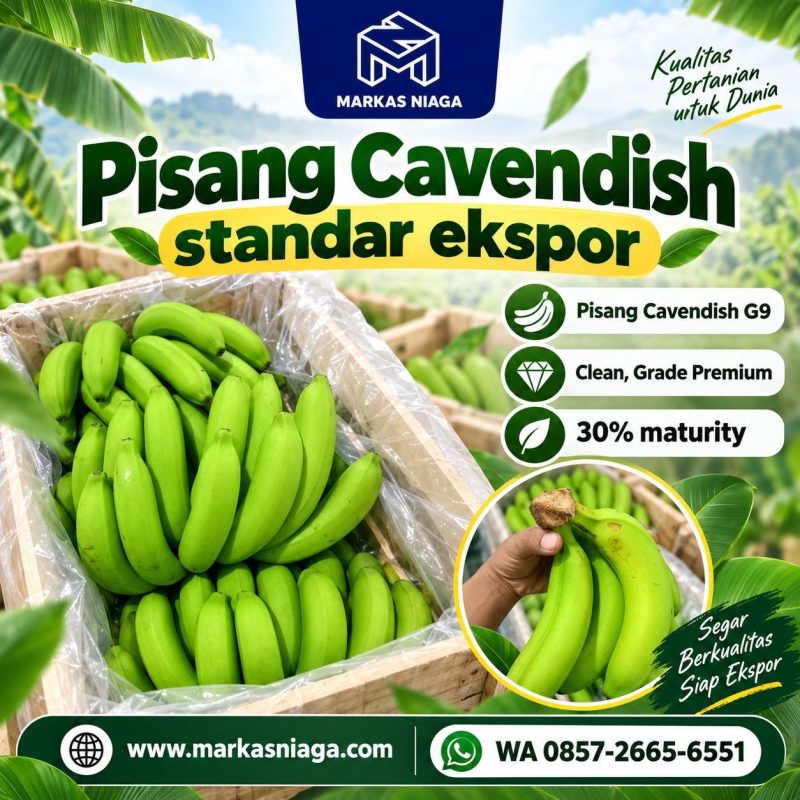
A supplier’s advertised “30% maturity” should not be accepted without clarification of the measurement method.
Buyers should request documented maturity criteria suitable for the intended shipping route and commercial ripening program.
4. Temperature Deviation Risks
Temperature management is one of the most important considerations in banana logistics.
Temperatures that are too low may cause chilling injury, while excessive temperatures may accelerate ripening and deterioration.
The correct temperature plan depends on fruit maturity, cultivar, shipping duration, and validated handling procedures.
A qualified logistics provider should confirm suitable settings.
5. Reefer Container Risks
Potential refrigerated container problems include:
- Incorrect temperature settings
- Equipment malfunction
- Poor airflow
- Inadequate pre-cooling
- Improper loading
- Blocked ventilation
- Delayed power connection
- Monitoring failures
Importers should request confirmation of container condition, loading procedures, and temperature monitoring arrangements.
6. Packaging and Handling Risks
Poor packaging can increase physical damage.
Buyers should define carton construction, ventilation, internal protection, stacking requirements, and acceptable carton condition.
Packaging suitability should be verified for the planned journey.
7. Shipping Delays
Potential delays include vessel schedule changes, port congestion, customs holds, documentation corrections, and inland transportation disruptions.
Importers should establish realistic shipment windows and contingency procedures.
No supplier or intermediary should guarantee an unverified transit schedule.
8. Documentation Risks
Incomplete or inconsistent documents can delay customs clearance.
Potential documents include:
- Commercial invoice
- Packing list
- Transport document
- Phytosanitary certificate where required
- Certificate of origin where applicable
- Import permits where required
- Other destination-specific records
The importer should verify current requirements before shipment.
9. Supplier Performance Risks
Supplier verification should address legal registration, production source, packing capacity, quality controls, export capability, and previous commercial experience.
Any claimed certification or facility approval should be independently checked.
10. Commercial and Financial Risks
International buyers should evaluate payment arrangements, currency exposure, contractual responsibilities, and potential nonperformance.
A written agreement should clearly define quantity, quality, delivery terms, payment milestones, and dispute procedures.
11. Cargo Insurance
Cargo insurance can provide protection against specified insured risks.
However, insurance policies may contain exclusions related to deterioration, temperature deviations, inherent vice, or inadequate packaging.
Buyers should review the actual policy rather than assuming all fresh fruit losses are covered.
12. Risk Management Matrix
| Risk | Potential Impact | Suggested Control |
|---|---|---|
| Incorrect maturity | Premature or uneven ripening | Written maturity criteria |
| Temperature deviation | Quality deterioration | Validated reefer plan |
| Poor packaging | Bruising and damage | Packaging approval |
| Shipping delay | Reduced marketability | Schedule buffers |
| Incorrect documents | Clearance delays | Pre-shipment document review |
| Supplier nonperformance | Financial and delivery loss | Due diligence |
| Quality dispute | Commercial disagreement | Inspection and claims clauses |
| Payment fraud | Financial loss | Independent bank verification |
13. Pre-Shipment Risk Assessment
Before loading, buyers should confirm:
- Supplier identity and contractual responsibilities
- Product specifications
- Inspection requirements
- Packaging approval
- Shipment documentation
- Container suitability
- Insurance arrangements
- Destination import eligibility
- Receiving procedures
- Claims process
14. Arrival Inspection and Claims
Upon arrival, the buyer should document container condition, temperature records where available, seal details, carton condition, and fruit quality.
Potential claims should be supported by evidence and submitted within the contractual time limits.
15. How IEC Supports Risk-Aware Sourcing
IEC can help buyers communicate risk-control requirements to potential Indonesian suppliers and request relevant supporting information.
IEC does not guarantee shipment performance or act as an insurer.
16. Frequently Asked Questions
What is the biggest risk in Cavendish banana shipping?
There is no single universal risk. Temperature management, maturity, handling, delays, and documentation can all materially affect outcomes.
Can reefer containers prevent every quality problem?
No. Product maturity, packaging, loading, and operational controls also matter.
Does CIF automatically cover all cargo deterioration?
No. Insurance coverage depends on the actual policy.
Can IEC guarantee export quality?
No. Product quality must be verified against agreed specifications.
Should buyers request pre-shipment inspection?
An agreed inspection can help reduce uncertainty, particularly for new supplier relationships.
Request Cavendish Banana Sourcing and Risk Planning Information
INDONESIA EXPORT CENTER
Website: https://indonesiaexportcenter.com/
Main Supplier Page: https://indonesiaexportcenter.com/indonesian-cavendish-banana-supplier/
WhatsApp: +62 813-3302-277
Send your destination, required quantity, quality specifications, packaging requirements, and shipping expectations.
Discuss Your Indonesian Cavendish Banana Sourcing Requirements with IEC.
Disclaimer: IEC is a sourcing intermediary. All supplier capabilities, product specifications, insurance coverage, regulatory requirements, and logistics arrangements require independent verification.
