

IEC | INDONESIA EXPORT CENTER
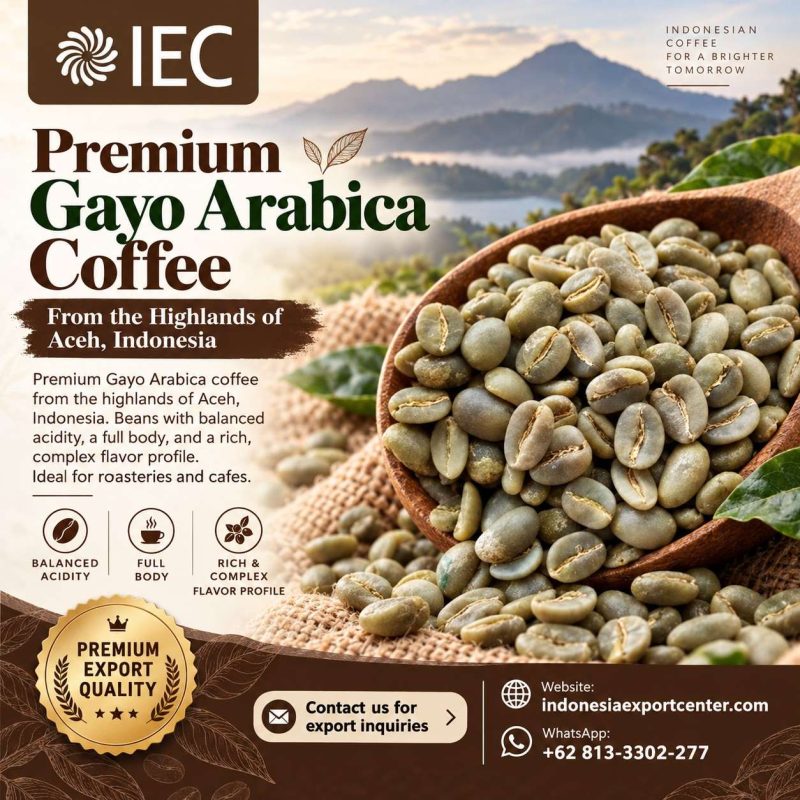
Indonesian Coffee for a Brighter Tomorrow
GAYO ARABICA COFFEE EXPORT SOURCING FROM INDONESIA
Supplier Matching | Green Coffee Procurement | Export Coordination | International Trade
Source Gayo Arabica Coffee Through a Structured Indonesian Procurement Process
International coffee purchasing requires reliable coordination between buyers, producers, processors, traders, exporters, and logistics providers.
For companies seeking Gayo Arabica coffee from Aceh, Indonesia, identifying a potential supplier is only the beginning. Buyers must also establish the supplier’s legal identity, confirm the actual coffee lot, evaluate quality, agree on contractual terms, and determine which company is responsible for exporting the goods.
Indonesia Export Center (IEC) supports this process as a sourcing intermediary, helping international buyers communicate their requirements and explore appropriate Indonesian supplier options.
IEC does not automatically act as the coffee producer, owner of the goods, contracting seller, or exporter of record. These roles must be established for every transaction.
Understanding the Gayo Arabica Supply Chain
Gayo Arabica coffee may pass through several participants before reaching an international buyer.
Coffee Farmers and Farmer Groups
Coffee cultivation begins with growers in the Gayo highland region of Aceh. The origin and producer information available to buyers depends on the specific supply arrangement.
Cooperatives and Collectors
Some coffee is aggregated through farmer groups, cooperatives, or commercial collectors. Aggregation may affect lot composition and traceability.
Processors and Dry Mills
Processing and preparation can include drying, hulling, sorting, grading, and packing, depending on the coffee and commercial requirements.
Coffee Traders
Trading companies may purchase and consolidate green coffee from different sources.
Exporters of Record
The exporter of record is the entity responsible for the export transaction and relevant customs declarations under applicable law.
International Importers
The importing company is responsible for fulfilling its destination-country obligations, which may include customs, food safety, and product traceability requirements.
A transparent sourcing transaction should identify the parties and their responsibilities before shipment.
What IEC Can Facilitate
IEC’s sourcing support may include:
- Reviewing the buyer’s purchasing specification.
- Identifying potential Indonesian suppliers.
- Clarifying whether a supplier is a producer, processor, trader, or exporter.
- Requesting available lot information.
- Coordinating sample inquiries.
- Facilitating technical and commercial communication.
- Clarifying proposed payment and delivery terms.
- Supporting communication about export documentation.
- Coordinating shipment-related discussions between the relevant parties.
The availability and scope of each service depend on the transaction.
Defining the Coffee Specification
A detailed specification helps prevent confusion between general Gayo Arabica descriptions and actual commercial lots.
| Parameter | Buyer Requirement |
|---|---|
| Coffee Origin | Aceh Gayo, Indonesia |
| Species | Arabica |
| Product Form | Green coffee beans |
| Processing Method | Buyer preference |
| Grade | Buyer requirement |
| Defect Limit | Specified method and threshold |
| Screen Size | Required range |
| Moisture | Agreed range |
| Water Activity | If required |
| Cupping Profile | Target sensory characteristics |
| Lot Quantity | kg or metric tons |
| Packaging | Bag and liner requirements |
| Harvest Period | If required |
| Traceability | Required level |
No specific coffee lot has been verified through the information supplied for this page.
Supplier Verification Checklist
Legal and Commercial Identity
Confirm the company’s registered name, authorized representatives, business address, and contractual role.
Product Ownership
Establish which entity owns or controls the coffee offered for sale.
Origin Evidence
Request records appropriate to the claimed geographic origin and traceability level.
Quality Evidence
Obtain available grading reports, moisture measurements, and cupping records.
Export Readiness
Confirm the proposed exporter, export documentation arrangements, and ability to meet the agreed shipment schedule.
Payment Verification
Verify beneficiary details through an independent communication channel before transferring funds.
Sample-to-Shipment Consistency
Agree on how the approved sample will be linked to the contracted shipment lot.
Sample Coordination and Approval
Samples should represent the coffee being offered.
Buyers may request an offer sample, a pre-shipment sample, or another agreed sample type.
The approval process should define who performs the evaluation, which testing method applies, and how the results affect contract acceptance.
For specialty coffee, cupping results should identify the lot, evaluation date, methodology, and evaluator where available.
Exporter of Record and Contracting Seller
The seller and exporter may be the same company, but this should not be assumed.
Before finalizing a transaction, the buyer should know:
- Who signs the sales contract.
- Who issues the commercial invoice.
- Who receives payment.
- Who prepares export declarations.
- Who arranges freight.
- Who supplies the agreed quality documents.
- Who is responsible for claims and discrepancies.
IEC’s intermediary role should be documented separately from these responsibilities.
Export Shipping Workflow
Stage 1 – Commercial Agreement
Confirm the coffee lot, specification, quantity, price, payment terms, Incoterm, and shipment period.
Stage 2 – Lot Preparation
The seller prepares the coffee according to the agreed quality and packaging requirements.
Stage 3 – Inspection
The parties carry out the agreed sampling and inspection procedures.
Stage 4 – Export Documentation
The exporter prepares the documents required for the transaction and applicable regulations.
Stage 5 – Freight Booking
The responsible party arranges shipment according to the contract.
Stage 6 – Import Clearance
The buyer or its appointed representative completes the necessary destination-country procedures.
Stage 7 – Receiving Inspection
The buyer verifies the delivered quantity, condition, and relevant documentation.
Common Export Documents
Depending on the destination and transaction, documentation may include:
- Commercial invoice.
- Packing list.
- Bill of lading or other transport document.
- Certificate of origin, where required.
- Relevant phytosanitary or other official certificates, where applicable.
- Quality or inspection report, if agreed.
- Insurance document, where applicable.
- Additional destination-specific documents.
Requirements should be verified for the actual shipment.
Incoterms for Gayo Arabica Procurement
Buyers may request quotations under FCA, FOB, CIF, or another appropriate Incoterm.
For containerized cargo, FCA may be appropriate where goods are handed to a carrier before vessel loading.
FOB and CIF are sea and inland waterway terms. Under CIF, the seller arranges carriage and required minimum insurance to the named destination port, while risk generally transfers when goods are loaded on board at origin.
Gayo Arabica Export Sourcing RFQ
Subject: Gayo Arabica Coffee Export Sourcing – Indonesia
Dear Indonesia Export Center Team,
We are seeking Indonesian Gayo Arabica green coffee beans for international import.
Company: [Name]
Country: [Country]
Website: [Website]
Required Processing: [Details]
Grade: [Details]
Defect Limit: [Details]
Moisture Requirement: [Details]
Cupping Requirements: [Details]
Quantity: [kg / MT]
Traceability Requirements: [Details]
Packaging: [Details]
Destination Port: [Port]
Preferred Incoterm: [Term]
Target Shipment Period: [Date]
Please advise on potential suppliers, available lot information, samples, exporter arrangements, and indicative quotations.
Best regards,
[Name]Frequently Asked Questions
Is IEC a Gayo coffee producer?
IEC is presented as a sourcing intermediary, not as the producer.
Does IEC act as exporter of record?
Not automatically. The actual exporter must be identified for each transaction.
Can buyers verify coffee origin?
Buyers can request supporting origin and traceability records from the proposed supplier.
Are current coffee lots available?
Current availability must be confirmed.
Can IEC facilitate sample requests?
Yes, subject to supplier cooperation and agreed terms.
Can importers request shipment documentation in advance?
Yes. The parties should establish a document checklist before contracting.
Start Your Indonesian Coffee Sourcing Inquiry
Connect your purchasing requirements with potential Indonesian Gayo Arabica suppliers through a structured sourcing process.
REQUEST GAYO ARABICA EXPORT SOURCING SUPPORT
IEC | INDONESIA EXPORT CENTER
Website: https://indonesiaexportcenter.com/
WhatsApp: +62 813-3302-277
Related Resources
Premium Gayo Arabica Coffee Supplier
Bulk Gayo Arabica Green Coffee Export
Aceh Gayo Coffee Import Buyer Guide
