

INDONESIA EXPORT CENTER
PREMIUM INDONESIAN SEAFOOD SOURCING
FRESH TUNA GRADING AND QUALITY CHECKLIST
Color | Texture | Odor | Fat Characteristics | Temperature | Product Traceability
Fresh Tuna Grading and Quality Checklist for International Seafood Buyers
Fresh tuna grading is an important part of international seafood procurement.
However, grade terminology varies between suppliers and markets.
Indonesia Export Center helps buyers clarify grading expectations when communicating with potential Indonesian tuna suppliers.
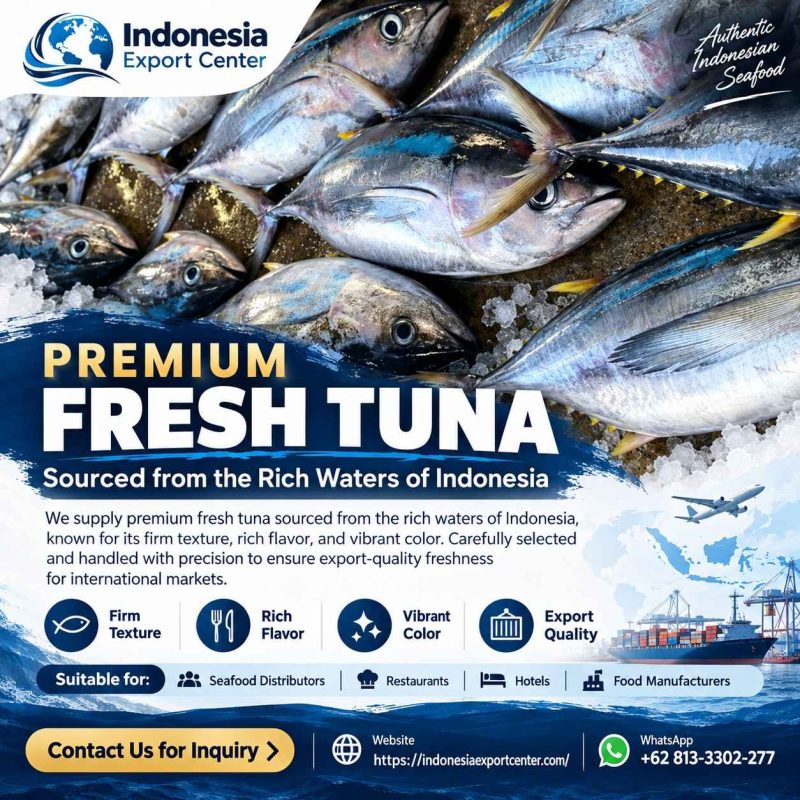
This guide explains key factors that buyers should consider when evaluating fresh yellowfin and bigeye tuna.
1. Product Categories
| Species | Scientific Name |
|---|---|
| Yellowfin Tuna | Thunnus albacares |
| Bigeye Tuna | Thunnus obesus |
Potential forms include whole fish and tuna loins.
2. Why Tuna Grading Matters
Grading helps buyers define expectations for:
- Product appearance
- Processing suitability
- Commercial value
- Quality consistency
- Market positioning
3. Color Evaluation
Color may be one component of commercial grading.
However, color can be influenced by:
- Species
- Muscle characteristics
- Oxygen exposure
- Handling
- Storage
- Other factors
Color alone cannot establish freshness, food safety, or raw-consumption suitability.
4. Texture
Buyers may assess:
- Firmness
- Surface condition
- Structural integrity
- Physical defects
5. Odor
Unusual odors may indicate quality problems.
However, the absence of an abnormal odor does not prove safety.
6. Fat Characteristics
Fat distribution may affect commercial grading, particularly for certain premium applications.
Fat characteristics should be evaluated using an agreed method.
7. Temperature History
Temperature records are essential.
A product can appear acceptable while having experienced unsafe handling conditions.
8. Histamine Risk
Tuna is associated with histamine hazards.
Buyers should evaluate preventive controls and relevant testing.
9. Whole Fish Inspection
Potential criteria include:
- Species identity
- External condition
- Size
- Physical damage
- Handling records
- Temperature history
10. Loin Inspection
Potential criteria include:
- Trim
- Flesh condition
- Bloodline
- Dark muscle
- Surface defects
- Weight
- Packaging
11. Grade Terminology
Supplier grade labels should be defined in writing.
Examples of commercial terminology may include:
- Premium
- Grade A
- Grade B
- Processing grade
These are not universal standards.
12. Quality Acceptance Criteria
Buyers should establish:
- Acceptable defects
- Size tolerances
- Grade definitions
- Temperature requirements
- Documentation
- Inspection procedures
13. Receiving Checklist
| Criterion | Buyer Verification |
|---|---|
| Species | Correct |
| Form | Correct |
| Grade | Meets specification |
| Size | Within tolerance |
| Appearance | Evaluated |
| Texture | Evaluated |
| Odor | Evaluated |
| Temperature | Meets requirements |
| Traceability | Available |
| Packaging | Intact |
14. Dispute Prevention
The purchase agreement should identify:
- Grading method
- Inspection responsibility
- Acceptance criteria
- Claims deadline
- Dispute procedure
Frequently Asked Questions
Is Grade A tuna defined the same everywhere?
No. Grade terminology varies.
Does red color guarantee freshness?
No. Color alone is insufficient.
Can IEC guarantee premium grade?
No. Product grade must be confirmed and accepted by the buyer.
Can buyers request photographs?
Yes. Lot-specific images may be requested.
Request Fresh Tuna Quality Specifications
INDONESIA EXPORT CENTER
Yellowfin and Bigeye Tuna | Quality Grading | International Seafood Procurement
WhatsApp: +62 813-3302-277
Website: https://indonesiaexportcenter.com/
Page: https://indonesiaexportcenter.com/fresh-tuna-grading-and-quality-checklist/
Send your species, product form, grade requirements, quantity, destination airport, and delivery date.
Disclaimer: IEC is a sourcing intermediary. Grading claims, product condition, safety, certifications, and supplier availability must be verified before purchase.
