

INDONESIA EXPORT CENTER
PREMIUM INDONESIAN SEAFOOD
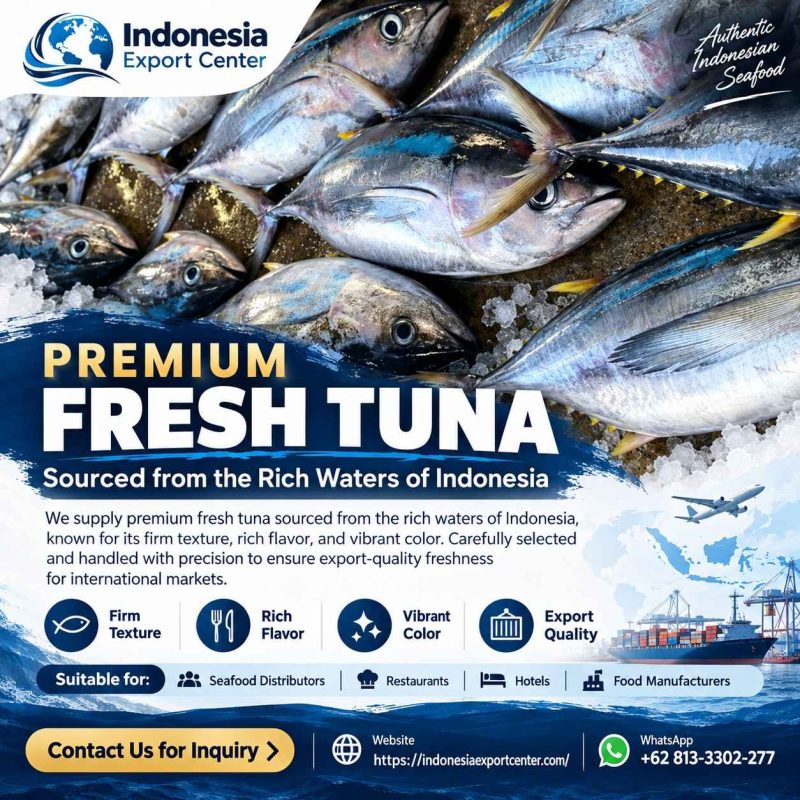
FRESH TUNA FOR SUSHI DISTRIBUTION
Yellowfin Tuna | Bigeye Tuna | Tuna Loins | Saku Cuts | Quality Documentation | International Procurement
Fresh Tuna for Sushi Distributors and International Seafood Wholesalers
Are you looking for fresh tuna for sushi distributors from Indonesia?
Indonesia Export Center helps international sushi wholesalers and seafood importers communicate with potential Indonesian suppliers of fresh yellowfin and bigeye tuna.
Sushi distribution requires careful evaluation of product identity, handling, quality, processing, packaging, and applicable food safety requirements.
Because sushi may involve raw fish, buyers must establish suitable acceptance criteria and verify compliance with destination-market regulations.
IEC facilitates supplier communication and documentation requests but does not certify that a product is safe for raw consumption.
1. Product Categories
| Product | Species | Form |
|---|---|---|
| Yellowfin Tuna | Thunnus albacares | Loin |
| Yellowfin Tuna | Thunnus albacares | Saku |
| Bigeye Tuna | Thunnus obesus | Loin |
| Bigeye Tuna | Thunnus obesus | Saku, subject to availability |
2. Sushi Distribution Procurement Requirements
Important considerations include:
- Species identity
- Product grade
- Cutting specification
- Handling history
- Temperature records
- Lot traceability
- Product safety
- Packaging
- Delivery schedules
3. Understanding Sushi-Grade Terminology
The term sushi-grade is widely used commercially but is not a universal legal certification.
Buyers should not rely solely on marketing labels.
Raw-consumption suitability requires a documented hazard assessment and compliance with relevant regulations.
4. Histamine Risk
Tuna is a histamine-forming fish.
Inadequate time-temperature control can result in histamine formation.
Appropriate preventive controls and, where relevant, testing are important.
5. Microbiological Safety
Buyers should evaluate:
- Processing hygiene
- Sanitation
- Cross-contamination controls
- Applicable microbiological criteria
- Storage procedures
6. Parasite Risk
Raw fish operations should evaluate parasite hazards and applicable regulatory requirements.
Any exemption from freezing or other controls must be justified under the relevant rules.
7. Loin and Saku Specifications
Buyers should define:
- Skin status
- Trim
- Bloodline removal
- Dimensions
- Weight range
- Grade
- Packaging
8. Supplier Documentation
Potential records include:
- Facility approvals
- Quality system documentation
- Product specifications
- Traceability
- Temperature records
- Relevant testing
- Health certificates
9. Shipment Planning
Fresh tuna shipping requires coordination of:
- Supplier preparation
- Cold chain
- Flight booking
- Airport handling
- Customs clearance
- Delivery timing
10. Distributor Quality Control
Receiving procedures should verify:
- Product identity
- Packaging integrity
- Temperature
- Lot number
- Documentation
- Product condition
11. Commercial RFQ
Include:
- Yellowfin or bigeye
- Loin or saku
- Grade
- Dimensions
- Quantity
- Packaging
- Destination airport
- Required delivery date
Frequently Asked Questions
Can IEC help source tuna for sushi distributors?
IEC can coordinate inquiries with potential suppliers.
Does IEC certify sushi-grade tuna?
No. Product suitability must be verified through appropriate safety and regulatory assessments.
Can buyers request batch-specific documents?
Yes. Availability depends on the supplier.
Can yellowfin and bigeye be requested separately?
Yes. Species should be specified individually.
Request Fresh Tuna for Sushi Distribution
INDONESIA EXPORT CENTER
Yellowfin and Bigeye Tuna | Sushi Wholesale Procurement
WhatsApp: +62 813-3302-277
Website: https://indonesiaexportcenter.com/
Page: https://indonesiaexportcenter.com/fresh-tuna-for-sushi-distributors/
Submit your species, form, grade, quantity, destination airport, and delivery date for a supplier inquiry.
Disclaimer: IEC acts as a sourcing intermediary and does not certify raw-consumption suitability. All safety, quality, traceability, supplier approvals, and import requirements must be independently verified.
