

IEC | INDONESIA EXPORT CENTER
DAMAR BATU HS CODE AND CUSTOMS CHECKS
Natural Resin Classification | HS Heading 1301 | Import Documentation | International Trade Compliance
Product / Buyer Need
Verify the Correct Customs Classification for Indonesian Damar Batu
International importers sourcing damar batu from Indonesia need to establish the correct customs classification before shipment.
The Harmonized System (HS) provides a framework for classifying internationally traded goods.
However, the appropriate classification depends on the actual material, its composition, processing condition, and the applicable national tariff schedule.
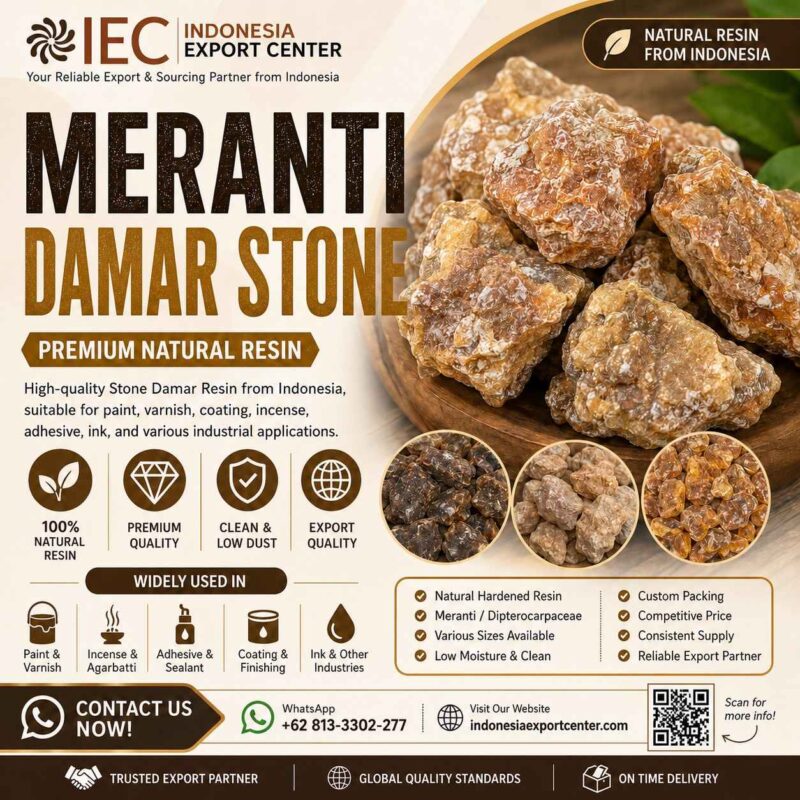
Damar batu is commercially described as a natural hardened resin. For raw natural resin products, HS heading 1301 may be relevant to the classification review.
Nevertheless, buyers should not treat a proposed heading as a confirmed customs code without examining the actual product and obtaining appropriate customs advice.
Indonesia Export Center (IEC) facilitates sourcing inquiries for international buyers of Indonesian natural resins and can coordinate requests for product descriptions and supplier documentation.
Understanding HS Classification
What Is an HS Code?
An HS code identifies goods within the internationally harmonized customs classification system.
The first six digits are internationally harmonized, while countries may use additional digits for national tariff classifications.
Why Classification Matters
The classification may affect:
- Import duties.
- Taxes.
- Customs declarations.
- Product-specific restrictions.
- Trade statistics.
- Rules of origin.
- Documentation requirements.
- Customs inspections.
HS Heading 1301 Context
HS heading 1301 covers certain natural gums, resins, gum-resins, and oleoresins.
A raw natural resin such as damar batu may fall within the scope considered under this heading, depending on its verified identity and condition.
However, classification must be determined using the applicable legal tariff text and relevant explanatory guidance.
The heading should not be applied automatically to every product marketed as damar.
Product Classification Checklist
| Classification Question | Buyer Action |
|---|---|
| What is the actual material? | Verify product identity |
| What is its botanical source? | Request evidence if relevant |
| Is it raw or processed? | Confirm processing history |
| Is it blended with other substances? | Confirm composition |
| What is its physical form? | Describe accurately |
| What is the intended use? | Document where relevant |
| Which country is importing? | Review national tariff |
| Which HS version applies? | Confirm current schedule |
| Are permits required? | Check applicable rules |
| Is a tariff preference claimed? | Verify origin eligibility |
Confirm the National Tariff Line
A six-digit HS classification may not be sufficient for a customs declaration.
The importing country may require an eight-digit, ten-digit, or other nationally defined tariff code.
Buyers should consult their customs broker or the relevant customs authority.
Indonesia Export Classification
The Indonesian exporter should confirm the applicable Indonesian tariff classification and export requirements.
Indonesia’s national tariff system may use additional digits beyond the harmonized six-digit level.
The correct code should be reviewed for the actual product.
Classification Responsibility
The importer and exporter have obligations under their respective customs laws.
IEC’s sourcing role does not replace the responsibility of the relevant declaring parties.
Where classification is uncertain, the importer may consider obtaining a formal classification ruling from the appropriate customs authority.
Raw Resin vs Processed Resin
Processing can affect classification.
For example, a raw natural resin may be classified differently from a chemically modified resin, prepared formulation, or finished manufactured product.
Buyers should disclose the actual processing history and composition.
Product Description for Customs
A useful commercial description should be accurate and specific.
An example structure is:
Natural Damar Batu Resin, [Verified Material Identity], [Physical Form], Origin Indonesia
The description must be completed with confirmed information.
Avoid unsupported claims concerning botanical species, purity, grade, or processing.
Customs Valuation
Customs value may depend on the applicable valuation rules, transaction price, and required adjustments.
The invoice value and Incoterm alone may not determine the final customs value in every jurisdiction.
Buyers should consult their customs broker.
Duties and Taxes
Import duties and taxes vary by destination country and applicable tariff classification.
Potential factors include:
- Customs value.
- Tariff rate.
- Origin.
- Trade agreements.
- Additional measures.
- Import taxes.
- Customs fees.
No universal duty rate should be assumed.
Rules of Origin
Goods sourced from Indonesia do not automatically qualify for preferential tariff treatment.
The buyer should verify whether the product meets the applicable rules of origin and whether the required proof of origin can be issued.
Import Restrictions and Permits
Depending on the destination and actual product, the buyer may need to assess:
- Customs restrictions.
- Plant-product regulations.
- Environmental requirements.
- Chemical regulations.
- Importer registration.
- Inspection requirements.
- Product documentation.
These requirements must be reviewed case by case.
Sampling & Terms
Before a commercial shipment, the buyer may request a sample to verify the material’s identity and intended use.
However, samples themselves may be subject to customs declarations, carrier restrictions, and import requirements.
The buyer and seller should confirm sample-shipment procedures before dispatch.
Import Workflow
Step 1: Confirm Product Identity
Obtain an accurate description of the offered resin.
Step 2: Review Classification
Identify potentially applicable HS headings.
Step 3: Validate National Tariff Code
Consult the destination customs schedule.
Step 4: Confirm Regulatory Requirements
Determine whether permits, registrations, or inspections apply.
Step 5: Verify Supplier and Exporter
Confirm legal entities and responsibilities.
Step 6: Approve Product Specification
Complete quality qualification.
Step 7: Confirm Commercial Terms
Agree on price, quantity, packaging, Incoterm, and payment.
Step 8: Prepare Documentation
Review invoice, packing list, transport documents, and other required records.
Step 9: Arrange Shipment
Coordinate with the responsible exporter and freight provider.
Step 10: Complete Import Clearance
The importer or its authorized customs representative completes the destination customs procedures.
Documentation Checklist
| Document | Purpose |
|---|---|
| Commercial Invoice | Transaction details |
| Packing List | Cargo and packaging details |
| Bill of Lading / Transport Document | Shipment information |
| Product Specification | Material description |
| COA, if required | Quality test results |
| Certificate of Origin, if applicable | Origin documentation |
| Import Permits, if required | Regulatory compliance |
| Customs Declaration | Formal import entry |
| Insurance Document, if applicable | Cargo coverage |
| Other Certificates | Transaction-specific requirements |
Common Customs Mistakes to Avoid
Assuming the HS Code from the Product Name
Trade names can be ambiguous.
Using a Foreign Country’s Tariff Code Without Checking
National tariff lines may differ.
Assuming All Natural Resins Have the Same Classification
Composition and processing matter.
Assuming Indonesian Origin Guarantees Preferential Duty
Origin eligibility must be verified.
Shipping Before Confirming Import Requirements
Unresolved regulatory requirements may delay clearance.
Treating IEC as the Exporter Automatically
The legal exporter must be identified.
Request for Quotation
Subject: Damar Batu Import Sourcing and Customs Documentation Inquiry
Dear Indonesia Export Center Team,
We are planning to import Indonesian damar batu and require product information for customs review.
Company: [Name] Destination Country: [Country] Destination Port: [Port] Product Description: [Details] Required Resin Identity: [Details] Physical Form: [Lumps / Other] Processing Condition: [Raw / Other] Proposed HS Code: [Code / To Confirm] Required Grade: [Specification] Order Quantity: [MT] Packaging: [Requirement] Preferred Incoterm: [Term] Required Documents: [List] Importer Compliance Requirements: [Details]
Please advise on supplier availability, product identification, exporter information, and commercial quotation.
Best regards,
[Name]
Frequently Asked Questions
What is the HS code for damar batu?
HS heading 1301 may be relevant for certain raw natural resins, but the correct classification must be confirmed for the actual material and destination country.
Is HS 1301 automatically correct for all damar products?
No.
Can the importing country use additional tariff digits?
Yes. National tariff schedules commonly extend beyond six digits.
Who is responsible for confirming the import classification?
The relevant importer or customs declarant should verify its classification obligations.
Does IEC provide binding customs rulings?
No. Such rulings are issued by the appropriate customs authority.
Can damar batu qualify for preferential import duty?
Possibly, where the applicable agreement and rules of origin are satisfied.
Can IEC help obtain product information for customs review?
IEC can facilitate requests for supplier documentation and product descriptions.
Request a Sourcing Quote
Looking for Indonesian damar batu with clear product information for international customs review?
Share your destination, required resin, order quantity, and documentation needs.
REQUEST DAMAR BATU IMPORT SOURCING INFORMATION
INDONESIA EXPORT CENTER
Your Reliable Export & Sourcing Partner from Indonesia
Website: https://indonesiaexportcenter.com/
WhatsApp: +62 813-3302-277
Related Resources
Damar Batu Shipping Documents Buyer Guide
How to Import Damar Batu from Indonesia
Damar Batu FOB Indonesia: Buyer RFQ
