

IEC | INDONESIA EXPORT CENTER
Your Global Sourcing Partner
CRUDE PALM OIL PRE-SHIPMENT INSPECTION
Cargo Verification | Representative Sampling | Laboratory Testing | Quantity Survey | Quality Approval
Why Pre-Shipment CPO Inspection Is Important
International buyers purchasing crude palm oil need reliable evidence that the offered cargo meets the agreed commercial and technical requirements.
Pre-shipment inspection can help identify discrepancies before cargo loading or contractual delivery.
For bulk liquid commodities, inspection may involve cargo identification, sampling, laboratory testing, tank condition review, quantity measurement, and documentary verification.
Indonesia Export Center (IEC) facilitates sourcing inquiries for Indonesian CPO and helps buyers communicate inspection requirements to potential suppliers.
IEC does not represent itself as an independent inspection company or laboratory.
What Is CPO Pre-Shipment Inspection?
Pre-shipment inspection is an agreed verification process conducted before or during the shipment preparation stage.
The scope depends on the contract.
It may involve:
- Supplier and cargo identification.
- Storage tank verification.
- Product sampling.
- Laboratory testing.
- Quantity measurement.
- Loading supervision.
- Tank cleanliness review.
- Document verification.
- Inspection reporting.
Not every transaction requires the same inspection program.
Why Buyers Request Independent Inspection
Buyers may use independent inspection to:
- Reduce uncertainty about cargo quality.
- Obtain representative samples.
- Verify selected specifications.
- Confirm quantity measurement.
- Document cargo condition.
- Support contract compliance.
- Establish retained samples.
- Reduce the risk of disputes.
- Improve shipment traceability.
- Support procurement approval.
Inspection does not eliminate all commercial or operational risk.
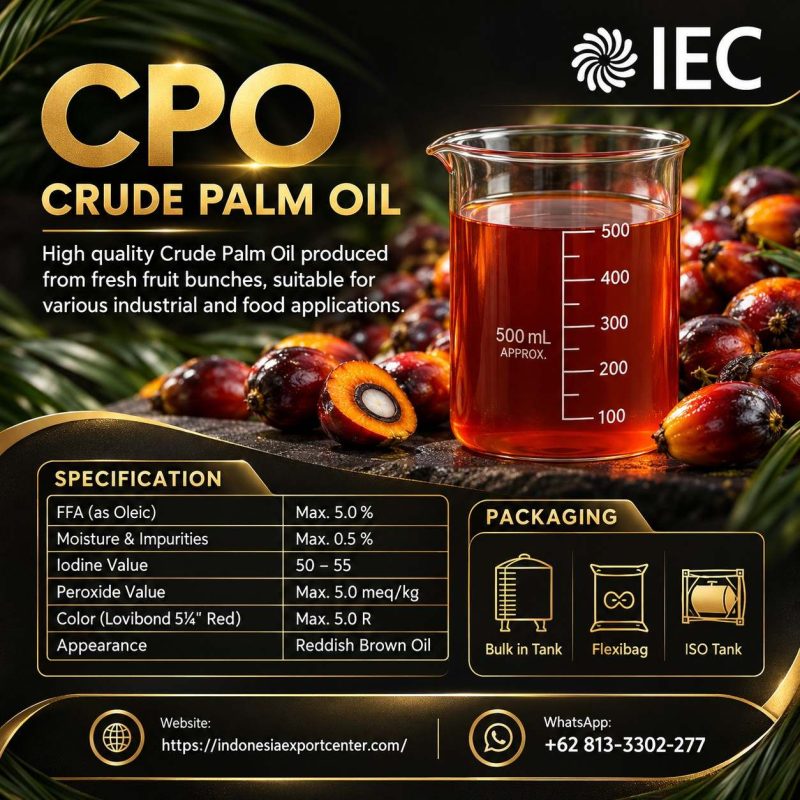
Reference CPO Quality Parameters
| Parameter | Reference Target | Inspection Focus |
|---|---|---|
| FFA, as Oleic | Max. 5.0% | Basis, method, actual result |
| Moisture & Impurities | Max. 0.5% | Sampling and measured content |
| Iodine Value | 50–55 | Laboratory method |
| Peroxide Value | Max. 5.0 meq/kg | Sample handling and test result |
| Lovibond Color, 5¼-inch Red | Max. 5.0 R | Cell path and reporting |
| Appearance | Reddish Brown Oil | Visual examination |
These figures are marketing reference targets. The actual purchase contract must establish the applicable limits.
Stage 1 – Supplier and Cargo Verification
Before sampling, the buyer should establish:
- Legal identity of the seller.
- Cargo ownership or selling authority.
- Storage location.
- Tank identification.
- Available quantity.
- Product identity.
- Loading arrangement.
- Applicable documentation.
Inspection of a tank does not independently prove that the seller owns its contents.
Stage 2 – Tank Condition and Cargo Identification
Depending on the inspection scope, the surveyor may review:
- Tank number.
- Cargo identification.
- Tank access.
- Relevant storage records.
- Cleaning information.
- Cargo segregation.
- Available sampling points.
- Operational safety conditions.
The inspector’s report should distinguish observed facts from information provided by the seller.
Stage 3 – Representative Sampling
Sampling is critical because laboratory results apply to the sample tested.
The buyer and seller should agree on:
- Sampling method.
- Sampling location.
- Timing.
- Number of samples.
- Composite sample preparation where appropriate.
- Sample containers.
- Sealing.
- Identification.
- Retention.
- Laboratory delivery.
Stage 4 – Laboratory Analysis
Testing should follow agreed analytical methods.
The laboratory should report:
- Sample identification.
- Analytical parameters.
- Testing methods.
- Results.
- Units.
- Reporting basis.
- Testing date.
- Relevant qualifications.
Stage 5 – Quantity Verification
Bulk CPO quantity may be determined using agreed tank measurements or other accepted procedures.
Relevant factors may include:
- Calibrated tanks.
- Temperature.
- Density.
- Measurement corrections.
- Transfer records.
- Contractual tolerances.
The accepted method should be defined in the purchase agreement.
Stage 6 – Loading Inspection
Where included in the scope, inspection may cover:
- Vessel or receiving tank identification.
- Tank cleanliness.
- Cargo transfer arrangements.
- Sampling during loading.
- Quantity records.
- Seal records.
- Loading documentation.
Stage 7 – Inspection Report
A useful report should identify:
- Inspection company.
- Client.
- Product.
- Location.
- Date.
- Inspection scope.
- Observations.
- Sampling procedure.
- Quantity findings.
- Laboratory references.
- Exceptions or limitations.
- Authorized report details.
Supplier COA Versus Independent Inspection
| Supplier COA | Independent Inspection |
|---|---|
| Reports analytical results from supplier-related testing | May provide independent sampling and verification |
| May support preliminary review | May support contractual acceptance |
| Requires authenticity checks | Requires scope and competence checks |
| May not represent the final shipment | Can be designed around the agreed cargo |
| Does not prove ownership | Does not independently prove ownership |
Both should be interpreted within their actual scope.
Pre-Shipment Inspection and Contract Terms
The purchase contract should define:
- Who appoints the inspector.
- Who pays inspection costs.
- Which sampling procedure applies.
- Which laboratory is accepted.
- Which results determine acceptance.
- Whether retesting is permitted.
- How retained samples are handled.
- What happens if specifications are not met.
- How quantity disputes are resolved.
Quality Failure and Corrective Action
If inspection identifies a deviation, possible contractual responses may include:
- Further verification.
- Retesting under an agreed procedure.
- Cargo rejection where permitted.
- Commercial renegotiation.
- Replacement cargo.
- Other remedies provided by contract.
No particular remedy should be assumed without reviewing the agreement.
CPO Pre-Shipment Inspection RFQ
Subject: Indonesian CPO Pre-Shipment Quality Inspection Inquiry
Company: [Name]
Country: [Country]
Product: Crude Palm Oil
Quantity: [MT]
Seller / Supplier: [If Known]
Cargo Location: [Location]
Loading Port: [Port]
Quality Specification: [Details]
FFA Basis: [Oleic / Other]
Sampling Requirement: [Details]
Laboratory Requirement: [Details]
Quantity Survey: [Required / Not Required]
Tank Inspection: [Required / Not Required]
Loading Supervision: [Required / Not Required]
Target Inspection Date: [Date]
Please advise on potential supplier documentation, available inspection arrangements, and the relevant commercial requirements.
Frequently Asked Questions
What is checked during CPO pre-shipment inspection?
The scope may include cargo identity, quality, sampling, quantity, tank condition, and documentation.
Is independent inspection mandatory for every CPO purchase?
Requirements depend on applicable rules and the purchase contract.
Does a supplier COA replace inspection?
Not necessarily. The buyer should assess the COA’s scope and representativeness.
Can IEC perform laboratory testing directly?
No direct laboratory capability is established here.
Who pays for inspection?
The contract should allocate inspection costs.
Can inspection guarantee the cargo will arrive unchanged?
No. Transportation and handling risks remain.
Can buyers require loading and discharge inspection?
Yes, subject to agreement and feasibility.
Request CPO Pre-Shipment Inspection Information
Strengthen your CPO procurement process with clearly defined sampling, testing, inspection, and documentary requirements.
REQUEST CPO PRE-SHIPMENT QUALITY INFORMATION
IEC | INDONESIA EXPORT CENTER
Website: https://indonesiaexportcenter.com/
WhatsApp Inquiry: +62 821-4172-3508
Related Resources
CPO Certificate of Analysis and Laboratory Testing
CPO Technical Specifications and Quality Parameters
Crude Palm Oil Bulk Vessel Shipment Guide
