

IEC | INDONESIA EXPORT CENTER
Your Global Sourcing Partner
Plan Recurring Crude Palm Oil Purchases from Indonesia
Industrial buyers depend on reliable raw material planning to maintain production continuity.
For refineries and processing facilities using crude palm oil, monthly procurement planning involves more than ordering a fixed volume.
Buyers must coordinate demand forecasts, storage capacity, cargo specifications, shipment schedules, working capital, import clearance, and contingency arrangements.
Indonesia Export Center (IEC) facilitates B2B inquiries for buyers interested in potential Indonesian CPO supply relationships.
Any recurring supply commitment must be verified and agreed with the actual supplier or exporter.
Why Monthly CPO Supply Planning Matters
A structured procurement plan can help buyers:
- Align raw material purchases with production demand.
- Reduce avoidable inventory shortages.
- Manage storage constraints.
- Schedule shipping and discharge operations.
- Improve working capital forecasting.
- Establish quality control procedures.
- Prepare for delivery delays.
- Evaluate supplier performance.
1. Forecast Monthly CPO Consumption
The starting point is expected production demand.
A buyer should estimate how much CPO the facility will consume during each planning period.
Factors may include:
- Production schedule.
- Planned operating days.
- Expected processing rate.
- Maintenance shutdowns.
- Feedstock yield assumptions.
- Seasonal demand.
- Existing inventory.
- Confirmed inbound cargoes.
A basic planning formula is:
Planned Purchase Requirement = Forecast Consumption + Target Closing Inventory − Opening Inventory − Confirmed Incoming Supply
This is a planning framework; the actual purchasing decision should account for inventory quality, losses, timing, and operational constraints.
2. Determine Storage Capacity
Storage capacity can limit the size and frequency of shipments.
Buyers should evaluate:
- Usable tank capacity.
- Existing inventory.
- Tank segregation.
- Cargo turnover.
- Heating and handling capability.
- Discharge rate.
- Tank maintenance schedules.
- Safety and operational requirements.
A large shipment may appear commercially attractive but create operational problems if sufficient receiving capacity is unavailable.
3. Define Monthly Purchase Volume
A monthly purchasing plan should distinguish:
Monthly consumption: Expected quantity used by the facility.
Monthly purchase target: Quantity the procurement team intends to buy.
Shipment quantity: Quantity per individual delivery.
Safety stock: Inventory maintained to manage uncertainty.
Total contracted quantity: Aggregate quantity covered by a supply agreement.
These values may differ.
4. Choose Shipment Frequency
Possible arrangements include:
- One shipment per month.
- Multiple shipments per month.
- Larger shipments at longer intervals.
- Flexible nominations under a supply contract.
The preferred structure depends on storage capacity, supplier capability, vessel availability, and freight economics.
5. Establish Quality Specifications
Recurring shipments should be evaluated against consistent technical requirements.
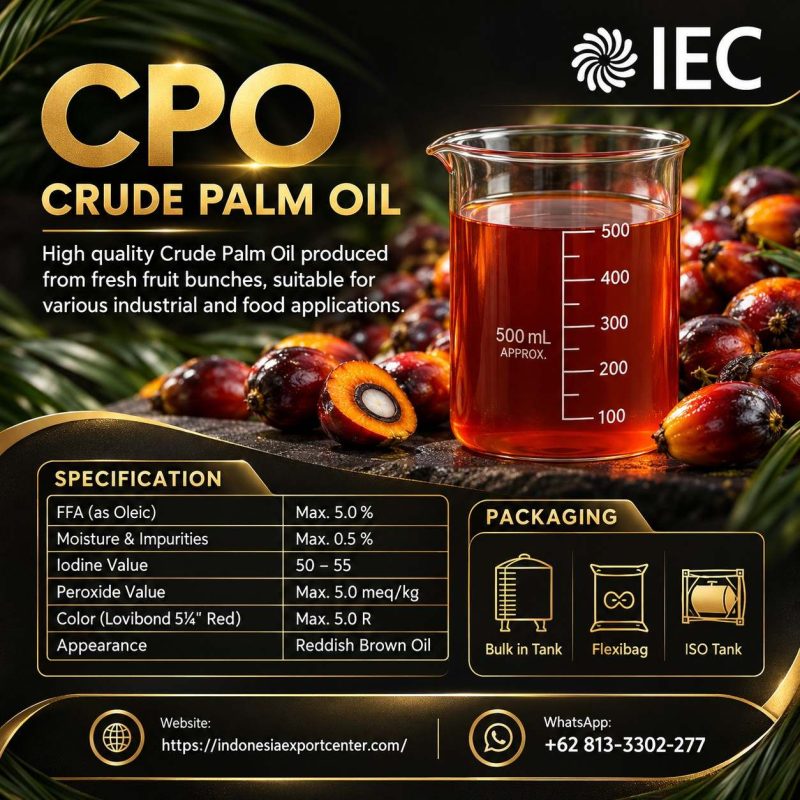
IEC Reference CPO Specifications
| Parameter | Reference Target |
|---|---|
| FFA, as Oleic | Maximum 5.0% |
| Moisture & Impurities | Maximum 0.5% |
| Iodine Value | 50–55 |
| Peroxide Value | Maximum 5.0 meq/kg |
| Lovibond Color, 5¼-inch Red | Maximum 5.0 R |
| Appearance | Reddish Brown Oil |
These are brochure-derived reference values. Each shipment requires appropriate verification.
6. Create a Rolling Procurement Forecast
A rolling forecast helps buyers adjust purchasing plans as actual demand changes.
A practical forecast may include:
| Planning Period | Forecast Demand | Opening Inventory | Confirmed Arrivals | Planned Purchase | Risk Notes |
|---|---|---|---|---|---|
| Month 1 | [MT] | [MT] | [MT] | [MT] | [Details] |
| Month 2 | [MT] | [MT] | [MT] | [MT] | [Details] |
| Month 3 | [MT] | [MT] | [MT] | [MT] | [Details] |
| Month 4 | [MT] | [MT] | [MT] | [MT] | [Details] |
Forecasts should be updated as new information becomes available.
7. Understand Procurement Lead Time
The total procurement timeline may include:
- Internal purchase approval.
- Supplier inquiry.
- Quotation and negotiation.
- Contract execution.
- Payment instrument preparation.
- Cargo preparation.
- Inspection.
- Vessel nomination or freight booking.
- Export clearance.
- Ocean transit.
- Import clearance.
- Discharge and delivery.
Actual lead times vary and must be confirmed for each transaction.
8. Coordinate Supplier and Shipping Schedules
Monthly supply plans should identify who is responsible for:
- Cargo readiness.
- Loading terminal booking.
- Vessel arrangements.
- Inspection.
- Export documentation.
- Freight and insurance.
- Destination discharge.
- Customs clearance.
The allocation depends on the contract and Incoterm.
9. Plan for Quality Variability
Even where a supplier has previously delivered acceptable cargo, future shipments should not automatically be assumed identical.
Buyers may establish:
- Consistent specification limits.
- Pre-shipment COA requirements.
- Agreed sampling methods.
- Independent inspection.
- Retained samples.
- Cargo acceptance procedures.
- Quality deviation reporting.
10. Develop a Contingency Plan
Potential disruptions include:
- Supplier delays.
- Port congestion.
- Vessel schedule changes.
- Quality rejection.
- Equipment problems.
- Regulatory changes.
- Demand increases.
- Payment or documentation delays.
A contingency plan may include alternate verified suppliers, appropriate inventory buffers, and revised production schedules.
11. Manage Working Capital
Recurring purchases require coordination between procurement and finance.
Buyers should consider:
- Cargo value.
- Payment timing.
- Freight costs.
- Import duties and taxes.
- Storage charges.
- Inspection costs.
- Currency exposure.
- Inventory financing.
- Insurance.
A supply agreement should not be signed without assessing the financial obligations created by its purchase schedule.
12. Monitor Supplier Performance
A supplier scorecard may track:
| Performance Indicator | Evaluation Focus |
|---|---|
| On-Time Delivery | Actual versus agreed shipment dates |
| Quantity Accuracy | Delivered versus contracted volume |
| Quality Compliance | Results against specification |
| Document Accuracy | Completeness and consistency |
| Responsiveness | Handling of operational issues |
| Commercial Reliability | Compliance with contract terms |
13. Monthly CPO Procurement Workflow
Demand Forecast → Inventory Review → Purchase Plan → Supplier Confirmation → Shipment Nomination → Quality Inspection → Export → Import → Delivery → Performance Review
Monthly Supply Inquiry Template
Subject: Indonesian Crude Palm Oil Monthly Supply Inquiry
Company: [Name]
Country: [Country]
Industry: [Refinery / Manufacturer / Trader]
Product: Crude Palm Oil
Monthly Requirement: [MT]
Total Expected Contract Quantity: [MT]
Contract Period: [Months]
Preferred Shipment Frequency: [Schedule]
Technical Specifications: [Details]
Destination Port: [Port]
Incoterm: [FOB / CFR / CIF]
Storage Capacity: [MT]
First Required Shipment: [Date]
Inspection Requirements: [Details]
Payment Preference: [Details]
Please advise on potential suppliers, verified recurring capacity, shipment arrangements, and proposed commercial terms.
Frequently Asked Questions
Can IEC guarantee monthly CPO deliveries?
No. Recurring capability must be confirmed by the actual seller and formalized contractually.
Is one monthly shipment always best?
No. Shipment frequency depends on demand, storage, and logistics.
Should buyers maintain safety stock?
The appropriate level depends on operational risk and inventory economics.
Can monthly CPO prices change?
Yes, depending on the agreed pricing mechanism.
Should each monthly cargo have its own COA?
Buyers should establish shipment-specific quality documentation requirements.
Can a monthly supply contract include flexible nominations?
Yes, where both parties agree to suitable nomination procedures.
Request Monthly CPO Supply Information
Plan Indonesian CPO sourcing around your production requirements, inventory capacity, shipment schedule, and verified supplier capability.
REQUEST MONTHLY CPO SUPPLY QUOTATION
IEC | INDONESIA EXPORT CENTER
Website: https://indonesiaexportcenter.com/
WhatsApp Inquiry: +62 821-4172-3508
Related Resources
CPO Spot Purchase vs Long-Term Supply Contract
Bulk Crude Palm Oil Sourcing Indonesia
Crude Palm Oil Bulk Tank Storage and Handling
