

IEC | INDONESIA EXPORT CENTER
MOISTURE CONTROL, STORAGE QUALITY, AND EXPORT HANDLING FOR DRIED CLOVES
Moisture Testing | Humidity Management | Mold Prevention | Warehouse Practices
Why Clove Moisture Content Matters
For international spice importers, clove moisture content for export is an important quality and storage consideration.
Dried cloves can absorb moisture when exposed to humid conditions. Inappropriate storage or handling may affect their condition, aroma, and suitability for commercial use.
IEC | Indonesia Export Center facilitates sourcing enquiries for Indonesian dried cloves and encourages buyers to establish clear moisture specifications and storage requirements before shipment.
Moisture control should be considered throughout the supply chain, from drying and packing to container loading, ocean transport, and destination warehousing.
DISCUSS CLOVE MOISTURE REQUIREMENTS
Indonesian Clove Reference Specifications
| Parameter | Reference |
|---|---|
| Product | Indonesian Dried Cloves |
| Botanical Name | Syzygium aromaticum |
| Origin | Indonesia |
| Form | Whole Dried Buds |
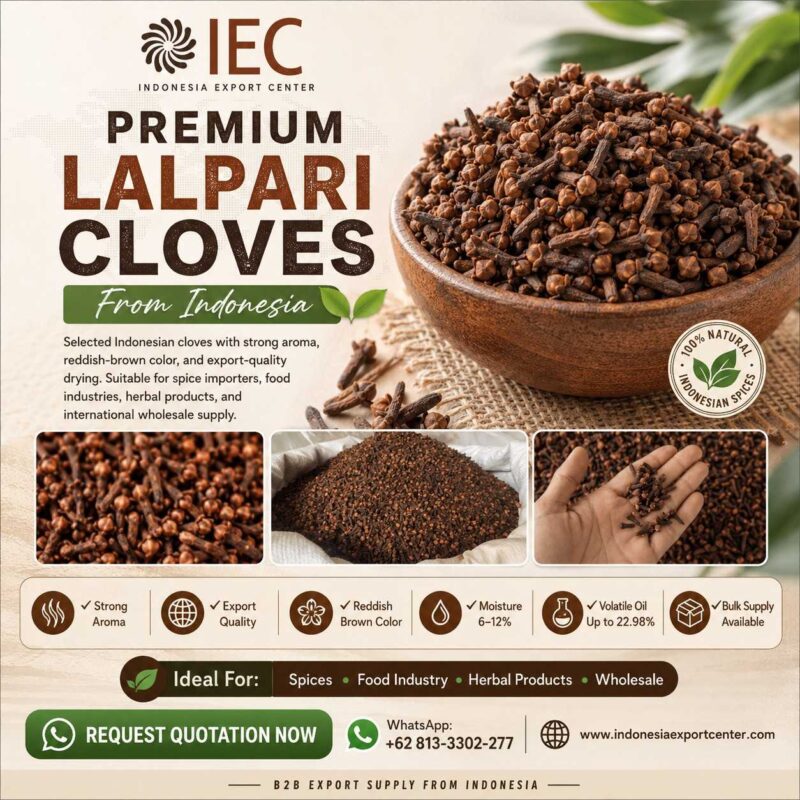
| Promotional Moisture Range | 6–12% |
| Volatile Oil | Up to 22.98% promotional reference |
| Moisture Acceptance Limit | Buyer-defined |
| Test Method | Agreed Method |
| Storage Requirements | Appropriate Dry, Clean Conditions |
| Shelf Life | Requires product-specific validation |
The promotional moisture range is not a universal export standard or a guarantee for every shipment.
Understanding Moisture Measurements
A moisture result represents the water content measured using a particular analytical procedure.
Different testing methods can produce differences in reported results.
For reliable comparisons, buyers and suppliers should agree on the test method, sample preparation, and reporting basis.
Moisture Testing Methods
Laboratory moisture testing may involve an appropriate validated method for spices.
Rapid moisture instruments may also be used for operational screening, provided they are suitable for the product and properly calibrated.
For contractual acceptance, the parties should specify the agreed reference method.
Negotiating Moisture Limits
A purchasing specification should define:
- Maximum moisture.
- Testing method.
- Sampling location.
- Sampling timing.
- Laboratory requirements.
- Acceptance criteria.
- Retesting procedure.
- Dispute resolution.
An agreed moisture limit should reflect the buyer’s intended use, storage conditions, and destination requirements.
Humidity During Storage and Transport
Cloves should be protected from moisture exposure throughout storage and shipping.
Potential risk factors include:
- Humid warehouse conditions
- Wet floors
- Damaged packaging
- Container leaks
- Condensation
- Temperature fluctuations
- Poor ventilation
- Improper stacking
- Extended exposure during loading
- Unsuitable destination storage
These risks should be considered when planning long-distance shipments.
Mold Prevention
Mold risk depends on more than a single average moisture measurement.
Local wet spots, condensation, storage conditions, and contamination can create problems even when an initial sample meets the contractual moisture limit.
Buyers should establish appropriate inspection and storage controls.
Material showing visible mold or abnormal odor should be investigated and should not be blended into acceptable cargo to conceal a problem.
Recommended Warehouse Practices
Keep Storage Areas Clean and Dry
Warehouses should be maintained in a condition suitable for food ingredients.
Protect Packaging Integrity
Damaged or wet bags should be identified and assessed promptly.
Separate from Strong Odors
Cloves should not be stored where they may absorb unwanted chemical or other odors.
Maintain Lot Identification
Clear batch records support traceability and quality investigation.
Monitor Storage Conditions
Where appropriate, warehouse operators should monitor humidity and temperature.
Apply Stock Rotation
A suitable stock rotation system can help reduce unnecessary storage time.
Packaging for Moisture Protection
Suitable liners and moisture-resistant packaging may help reduce exposure, but packaging alone cannot correct an improperly dried product.
Buyers should verify packaging compatibility, sealing arrangements, and food-contact suitability.
Container Loading and Shipping
Before loading, inspect the container for water damage, leaks, contamination, and unsuitable odors.
Cargo should be protected from rain during handling.
Condensation management and container suitability should be assessed according to the route and cargo configuration.
Clove Storage and Moisture RFQ
Subject: Indonesian Cloves – Moisture and Storage Requirements
Company: [Name]
Destination: [Country]
Product: Dried Cloves
Quantity: [MT]
Maximum Moisture: [%]
Required Test Method: [Specify]
Packaging and Liner: [Specify]
Expected Transit Time: [Estimate]
Warehouse Requirements: [Specify]
Additional Quality Tests: [Specify]
Incoterm: [FOB / CFR / CIF]
Please advise whether potential suppliers can meet the requested moisture and packing requirements.
REQUEST CLOVE MOISTURE INFORMATION
Frequently Asked Questions
What is the ideal moisture content for export cloves?
The appropriate limit depends on the buyer’s specification, intended use, and storage conditions.
Does IEC guarantee 6–12% moisture?
No. This is a promotional reference and must be confirmed for the offered lot.
Can cloves absorb moisture during shipping?
Yes. Exposure to humid conditions or condensation can affect product condition.
Does low moisture eliminate mold risk?
No. Storage conditions, contamination, and localized moisture exposure also matter.
Can a moisture test report be requested?
Yes, subject to supplier and laboratory arrangements.
What are the MOQ, lead time, and documents?
These depend on the actual supplier offer, testing requirements, packaging, and destination regulations.
Protect Clove Quality from Origin to Destination
IEC | INDONESIA EXPORT CENTER
INDONESIAN CLOVE SOURCING WITH BUYER-DEFINED QUALITY REQUIREMENTS
DISCUSS YOUR CLOVE STORAGE AND MOISTURE REQUIREMENTS
WhatsApp: +62 813-3302-277
Website: https://indonesiaexportcenter.com/
Connecting Indonesian Products to the World.
Storage conditions, moisture specifications, packaging performance, and shelf-life claims require appropriate verification.
