

INDONESIA EXPORT CENTER
Certificate of Analysis | Botanical Extract Quality Control | Supplier Qualification
Why a Cinnamon Oleoresin COA Matters
A cinnamon oleoresin Certificate of Analysis (COA) is an important document for industrial buyers evaluating product quality and conformity with agreed specifications.
A COA should identify the tested batch and report relevant analytical results.
However, the presence of a COA does not automatically establish that an ingredient is safe, authentic, compliant with every regulation, or suitable for every application.
Indonesia Export Center (IEC) facilitates supplier documentation inquiries and helps international buyers communicate their quality requirements.
IEC has not independently verified the availability or results of a particular supplier’s COA.
REQUEST CINNAMON OLEORESIN COA AND QUALITY DOCUMENTS
What Is a Certificate of Analysis?
A Certificate of Analysis is a quality document that reports the results of specified tests performed on an identified product batch.
It may be issued by a manufacturer, supplier, or testing laboratory, depending on the quality system and commercial arrangement.
Buyers should verify who performed the tests, which methods were used, and whether the document corresponds to the actual lot being offered.
What Information Should a COA Include?
| COA Element | Why It Matters |
|---|---|
| Product Name | Identifies the material |
| Botanical Species | Supports ingredient identity |
| Plant Part | Defines raw material |
| Batch or Lot Number | Links results to product |
| Manufacturing Date | Supports traceability |
| Test Date | Identifies analytical timing |
| Specification Limits | Defines acceptance criteria |
| Actual Test Results | Demonstrates measured values |
| Test Methods | Supports result interpretation |
| Units | Prevents ambiguity |
| Laboratory Identification | Identifies testing source |
| Authorized Review | Supports document accountability |
Preliminary Chemical Parameters
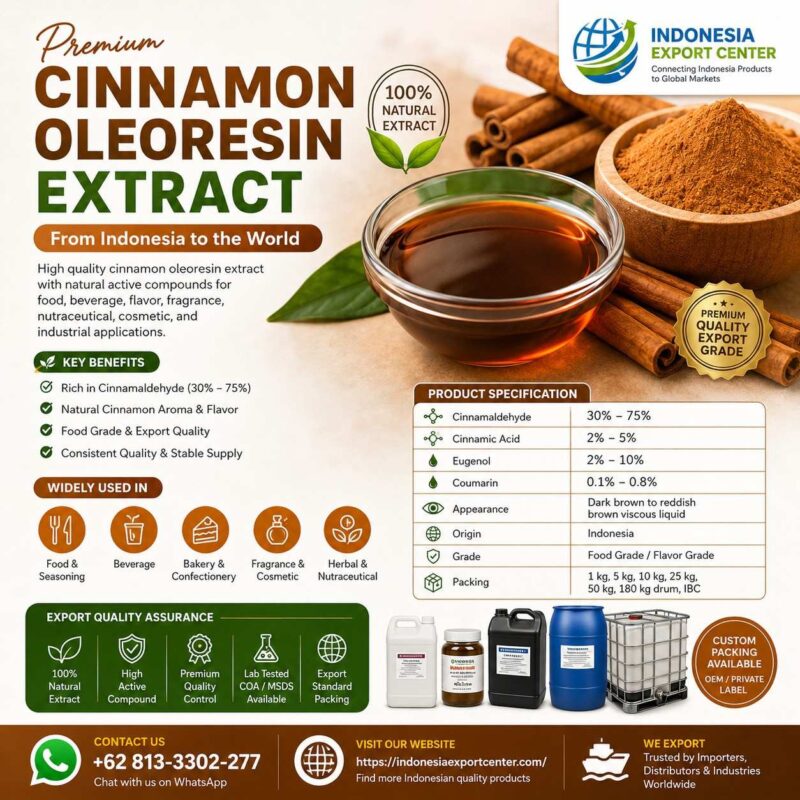
The initial commercial brief proposes the following values:
| Compound | Unverified Reference |
|---|---|
| Cinnamaldehyde | 30–75% |
| Cinnamic Acid | 2–5% |
| Eugenol | 2–10% |
| Coumarin | 0.1–0.8% |
These are not batch-specific COA results.
They should not be copied into an actual COA unless supported by valid analytical testing and the agreed product specification.
Cinnamaldehyde Testing
Cinnamaldehyde is an important aromatic constituent associated with cinnamon.
Its analysis may support chemical characterization and specification control.
The analytical method should be suitable for the actual product matrix.
Coumarin Testing
Coumarin may be a relevant safety and regulatory parameter, particularly for certain cassia-derived ingredients.
Buyers should request quantitative results where appropriate and evaluate them for the intended use.
Analytical Methods
Methods such as gas chromatography or high-performance liquid chromatography may be appropriate for selected constituents, depending on the analyte and product matrix.
The laboratory should demonstrate that the chosen method is fit for purpose.
A result should not be accepted solely because a familiar instrument name appears on the report.
Residual Solvent Testing
If the oleoresin is produced using extraction solvents, relevant residual solvent testing may be required.
The supplier should disclose the extraction process sufficiently to support an appropriate testing plan.
Heavy Metal Testing
Depending on the intended use and destination market, testing may include lead, cadmium, arsenic, and mercury.
Acceptance limits should be established according to applicable requirements.
Pesticide Residue Testing
Botanical raw materials may require pesticide residue assessment.
Testing scope should be appropriate to the raw material, supply chain, and destination requirements.
Microbiological Testing
Relevant tests may include total aerobic microbial count, yeast and mold, and specified microorganisms where appropriate.
The applicable criteria depend on the actual ingredient and intended use.
Authenticity and Adulteration
Chemical fingerprinting and botanical documentation may help identify inconsistencies.
A single marker concentration is not sufficient to establish complete authenticity.
COA vs TDS vs SDS
| Document | Primary Function |
|---|---|
| COA | Reports batch-specific test results |
| TDS | Describes product characteristics and specifications |
| SDS | Communicates hazard and safety-handling information |
These documents serve different purposes.
How to Review a Supplier COA
Buyers should confirm that the document matches the offered product and lot, that the reported results are complete, and that relevant results fall within agreed acceptance criteria.
Unexpected results should be clarified before commercial acceptance.
Third-Party Laboratory Verification
Independent testing may be appropriate for supplier qualification, high-value orders, or situations where additional assurance is required.
Testing arrangements should be agreed by the buyer and seller.
Frequently Asked Questions
Does a COA guarantee food safety?
No. It provides results for the tests performed and must be interpreted within a broader quality assessment.
Can two suppliers have different COA specifications?
Yes. Product composition and agreed specifications may differ.
Should coumarin appear on a cinnamon oleoresin COA?
It may be important depending on species, intended use, and regulatory requirements.
Can IEC provide a verified COA immediately?
Availability depends on the actual supplier and product.
Is third-party testing mandatory?
Requirements depend on the application, market, and purchasing agreement.
Can buyers request additional tests?
IEC can communicate testing requirements to potential suppliers.
Request Cinnamon Oleoresin Quality Documentation
IEC welcomes inquiries from QA managers, procurement teams, flavor laboratories, and food ingredient importers.
REQUEST BATCH COA, TDS, TEST METHODS AND SAMPLE
INDONESIA EXPORT CENTER
Website: https://indonesiaexportcenter.com/
WhatsApp: +62 813-3302-277
Related Pages
- Cinnamon Oleoresin Specifications
- Coumarin in Cinnamon Oleoresin
- Cinnamon Oleoresin Export Documents
