

IEC | INDONESIA EXPORT CENTER
Your Global Sourcing Partner
Pre-Shipment Inspection for Indonesian Gum Copal Buyers
Pre-shipment inspection can be an important risk management measure for international buyers purchasing natural resin.
For Gum Copal, inspection may help verify whether the material prepared for shipment matches the agreed product description, grade, quantity, packaging, and other contractual requirements.
Indonesia Export Center (IEC) facilitates sourcing inquiries involving potential Indonesian Gum Copal suppliers.
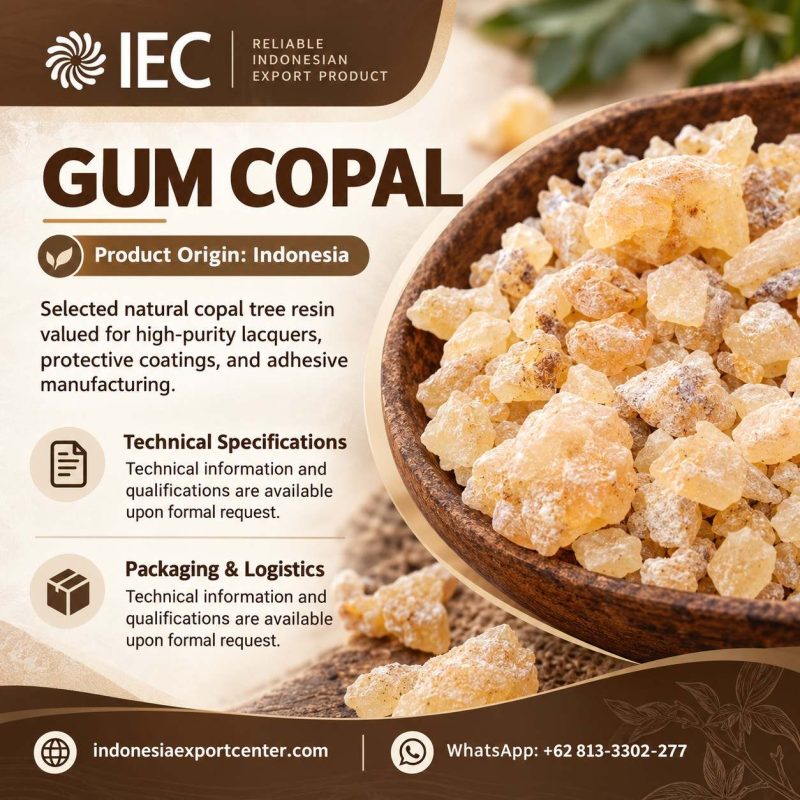
The IEC product brochure identifies the material as natural copal tree resin originating from Indonesia.
IEC does not automatically provide or guarantee an inspection service. Independent inspection, where required, must be arranged and agreed with the relevant parties.
What Is Pre-Shipment Inspection?
Pre-shipment inspection is an agreed examination of goods or shipment conditions before dispatch.
Depending on the contract, it may include:
- Product identity.
- Physical appearance.
- Grade.
- Quantity.
- Packaging.
- Labelling.
- Sampling.
- Loading.
- Shipment documentation.
Inspection findings apply only to the scope and conditions examined.
Why Gum Copal Buyers Consider Inspection
Natural resin transactions may involve:
- Variable product grades.
- Physical contamination.
- Differences in appearance.
- Quantity discrepancies.
- Packaging problems.
- Unclear lot identification.
- Shipment documentation errors.
A well-defined inspection program can help identify certain problems before dispatch.
Step 1 – Establish the Inspection Scope
The buyer and seller should agree on:
- Inspection location.
- Inspection timing.
- Responsible inspector.
- Product specification.
- Sampling procedure.
- Quantity verification method.
- Acceptance criteria.
- Reporting format.
- Cost responsibility.
- Procedure for nonconformities.
Step 2 – Verify Product Identity
The inspector may compare:
- Purchase contract.
- Product labels.
- Supplier records.
- Grade descriptions.
- Available technical documents.
Visual appearance alone may not establish botanical or chemical identity.
Step 3 – Check Quantity
Quantity verification may involve:
- Package counting.
- Net-weight records.
- Weighing arrangements.
- Gross and tare weight review.
- Loading records.
The method should be appropriate for the shipment.
Step 4 – Inspect Physical Quality
Relevant observations may include:
- Colour.
- Appearance.
- Lump size.
- Visible foreign matter.
- Mixed material.
- Signs of contamination.
- Packaging condition.
Step 5 – Collect Samples
If laboratory testing is required, the sampling plan should identify:
- Lot.
- Sampling locations.
- Sample quantity.
- Sample preparation.
- Sample containers.
- Sealing.
- Labelling.
- Chain of custody.
- Retained samples.
Step 6 – Conduct Laboratory Testing
Possible tests may include:
- Moisture.
- Foreign matter.
- Acid value.
- Thermal behavior.
- Other buyer-defined parameters.
The methods and acceptance criteria must be agreed in advance.
Step 7 – Inspect Packaging
Check:
- Packaging type.
- Package integrity.
- Net weight.
- Labelling.
- Lot identification.
- Protection from contamination.
- Handling suitability.
Step 8 – Review Loading Conditions
Where loading inspection is included, relevant checks may cover:
- Container or transport unit condition.
- Cleanliness.
- Cargo arrangement.
- Package condition.
- Loading quantity.
- Seal details, if applicable.
Step 9 – Record Photographic Evidence
Photographs may document:
- Product appearance.
- Packaging.
- Labels.
- Loading.
- Container condition.
- Identified discrepancies.
Photographs should be linked to the inspection report and should not be treated as proof of untested properties.
Step 10 – Issue the Inspection Report
A useful report may include:
| Field | Information |
|---|---|
| Buyer | Identified |
| Seller | Identified |
| Product | Gum Copal |
| Grade | Specified |
| Inspection Date | Recorded |
| Location | Recorded |
| Quantity | Verified within scope |
| Sampling | Documented |
| Quality Observations | Recorded |
| Packaging | Assessed |
| Photographs | Referenced |
| Nonconformities | Listed |
| Inspector | Identified |
What Inspection Cannot Guarantee
Even a professionally conducted inspection cannot guarantee:
- Absence of every defect.
- Future product performance.
- Supplier financial reliability.
- Successful customs clearance.
- Complete elimination of shipping risk.
- Quality of material outside the inspected scope.
Pre-Shipment Inspection RFQ
Subject: Indonesian Gum Copal Pre-Shipment Inspection Inquiry
Buyer Company: [Name]
Country: [Country]
Product: Natural Gum Copal
Supplier: [Name]
Grade: [Details]
Shipment Quantity: [KG / MT]
Inspection Location: [Location]
Required Inspection Date: [Date]
Quality Specification: [Details]
Sampling Requirements: [Details]
Laboratory Tests: [Details]
Packaging Requirements: [Details]
Loading Inspection Required: [Yes / No]
Photo Documentation Required: [Yes / No]
Please clarify the inspection scope, responsible parties, reporting requirements, and proposed arrangements.
Frequently Asked Questions
Is pre-shipment inspection mandatory for every Gum Copal order?
Not universally. Requirements depend on the contract and applicable regulations.
Does IEC provide automatic inspection?
No.
Can buyers appoint an independent surveyor?
This may be arranged subject to agreement.
Can inspection verify product weight?
It can, within the agreed method and scope.
Can inspection include laboratory testing?
Yes, where arranged.
Does inspection guarantee customs clearance?
No.
Request Gum Copal Inspection Coordination Information
Planning an Indonesian Gum Copal purchase that requires quality, quantity, or loading verification?
Contact IEC with your shipment details and inspection requirements.
REQUEST GUM COPAL INSPECTION INFORMATION
IEC | INDONESIA EXPORT CENTER
Website: https://indonesiaexportcenter.com/
WhatsApp: +62 813-3302-277
Related Resources
Gum Copal Supplier Verification Checklist
Gum Copal COA and Laboratory Reports
