

IEC | INDONESIA EXPORT CENTER
Microbiological Quality Control • Botanical Extract Safety • Laboratory Testing • Supplier Qualification
Why Microbial Testing Matters for Red Galangal Extract
Botanical raw materials may be exposed to microorganisms during cultivation, harvesting, drying, storage, and processing.
For companies evaluating red galangal extract microbial testing, microbiological quality is an important part of determining whether a batch meets the buyer’s intended-use specification.
Indonesia Export Center (IEC) facilitates inquiries for potential Indonesian sources of botanical extract powder associated with Alpinia purpurata.
No verified microbiological results have been supplied for the proposed commercial material.
IEC can coordinate requests for available testing information, batch Certificates of Analysis, samples, and seller-approved quotations.
REQUEST MICROBIAL TESTING DOCUMENTATION
Product Identification
Before reviewing microbial results, buyers should confirm the botanical identity and actual manufacturing process.
The proposed species is Alpinia purpurata, recognized by Plants of the World Online.
The species and plant part of the actual material remain unverified.
Preliminary Product Profile
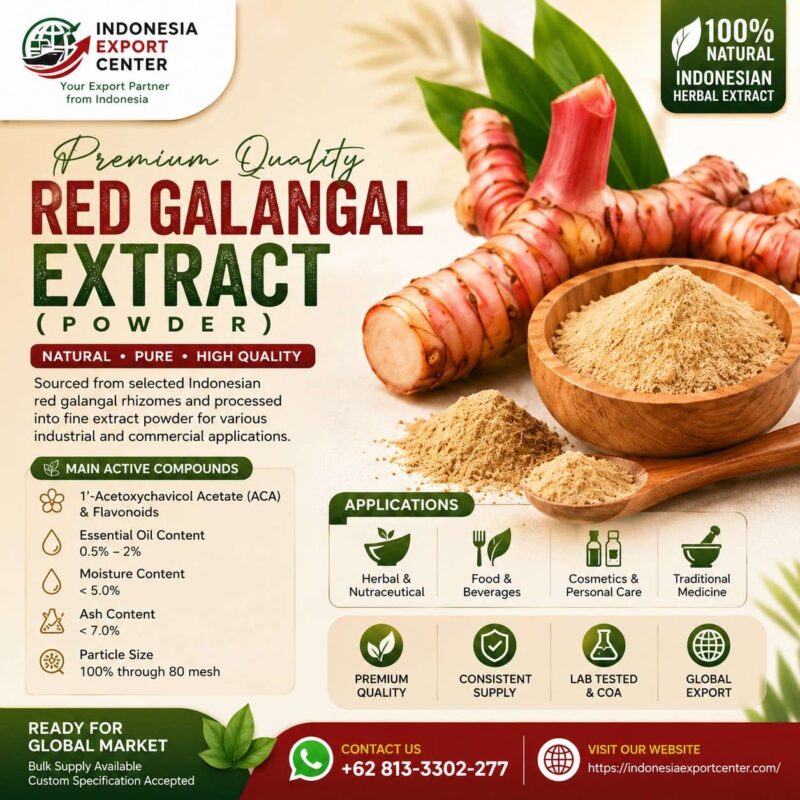
| Parameter | Proposed Reference |
|---|---|
| Product | Red Galangal Extract Powder |
| Proposed Species | Alpinia purpurata |
| Proposed Plant Part | Rhizome |
| Origin | Indonesia proposed |
| Moisture | Below 5% proposed |
| Ash | Below 7% proposed |
| Particle Size | 80 mesh proposed |
| Essential Oil | 0.5–2% proposed |
| Microbial Limits | Not established |
| Microbial Test Results | Not available |
| Processing Controls | Not verified |
Sources of Microbial Contamination
Potential contamination may occur through soil, water, handling, equipment, drying surfaces, packaging, and storage conditions.
The actual risk depends on the supply chain and manufacturing process.
Common Microbiological Tests
| Test | General Purpose |
|---|---|
| Total Aerobic Microbial Count | Evaluate overall aerobic microbial burden |
| Total Yeast and Mold Count | Evaluate fungal contamination |
| Escherichia coli | Assess specified microbial contamination |
| Salmonella | Evaluate a relevant pathogen hazard |
| Staphylococcus aureus | May be relevant for certain applications |
| Other Specified Organisms | Based on intended use and applicable standards |
Not every test is required for every application. Testing should follow a justified specification.
Total Aerobic Microbial Count
Total aerobic microbial count is commonly used as a general indicator of microbial burden.
The result should be interpreted against an appropriate acceptance criterion.
No batch result has been provided.
Yeast and Mold Testing
Botanical powders may require yeast and mold testing, particularly where raw material drying and storage conditions create relevant risks.
The acceptance criteria depend on the intended application.
Pathogen Testing
Specified pathogen testing may be required according to product category, destination market, and buyer risk assessment.
A negative result for one tested organism does not establish the absence of all microbial hazards.
Microbial Limits and Intended Use
Cosmetic Ingredients
Requirements may depend on the finished cosmetic product, ingredient risk, and relevant quality standards.
Food Ingredients
Applicable food safety criteria and intended processing conditions must be assessed.
Nutraceutical Ingredients
Testing requirements depend on the relevant product and regulatory framework.
Research Materials
Laboratory specifications should reflect the study’s requirements.
No product-specific microbial acceptance limits have been established.
Microbial Testing Methods
Laboratories should use appropriate validated or otherwise suitable methods.
The test report should identify the method, units, detection or quantification limits where relevant, sample identification, and results.
Interpreting a Microbial COA
A meaningful COA should identify:
- Product name.
- Batch number.
- Test method.
- Microbiological parameter.
- Acceptance criterion.
- Actual result.
- Reporting units.
- Testing date.
- Laboratory identity.
- Authorized report information.
Moisture and Microbial Risk
Moisture may influence microbial stability, but moisture content alone does not establish microbiological safety.
The proposed moisture target below 5% has not been verified.
Water activity and storage conditions may also be relevant, depending on the product.
Processing and Contamination Control
A qualified supplier should use appropriate controls during raw material receiving, extraction, drying, packaging, and storage.
The buyer should assess whether the actual processor has suitable procedures and records.
Batch Release Criteria
Before commercial acceptance, the buyer should define microbial limits appropriate to the intended application.
A batch should be assessed against agreed criteria rather than generalized marketing statements such as “microbiologically safe.”
Independent Testing
Buyers may request independent laboratory testing where justified by risk, supplier history, or customer requirements.
Sampling procedures should be appropriate to the material and test objective.
Frequently Asked Questions
Is the proposed extract microbiologically tested?
No verified test report has been supplied.
What is the acceptable total plate count?
The limit depends on the intended application and applicable requirements.
Is moisture below 5% enough to prevent contamination?
No.
Can IEC request microbial test results?
IEC can coordinate inquiries.
Is a COA sufficient for microbiological approval?
The buyer must evaluate the report, methods, limits, and relevance.
Can suppliers provide additional pathogen testing?
Requests may be submitted for feasibility review.
Request Microbiological Documentation
IEC welcomes inquiries from QA managers, botanical ingredient importers, cosmetic manufacturers, and research laboratories.
REQUEST MICROBIAL COA, TDS, SAMPLE & RFQ
INDONESIA EXPORT CENTER
Website: https://indonesiaexportcenter.com/
WhatsApp: +62 813-3302-277
Related pages:
- Alpinia Purpurata Extract Quality Testing
- Red Galangal Extract COA Requirements
- Red Galangal Extract Shelf Life Requirements
SEO METADATA
SEO Title: Red Galangal Extract Microbial Testing | Indonesia Export Center
Meta Description: Explore red galangal extract microbial testing, including total aerobic count, yeast and mold, pathogen screening, batch COA requirements, and quality control.
Focus Keyword: red galangal extract microbial testing
URL Slug: red-galangal-extract-microbial-testing
Canonical URL: https://indonesiaexportcenter.com/red-galangal-extract-microbial-testing/
Search Intent: Informational / Commercial
