

IEC | INDONESIA EXPORT CENTER
Your Global Sourcing Partner
CRUDE PALM OIL FLEXIBAG SHIPPING ASSESSMENT
Cargo Compatibility | Carrier Approval | Temperature Management | Container Safety
Is Flexibag Shipping Suitable for Crude Palm Oil?
Flexibag systems are used in selected liquid bulk logistics applications, but they are not universally suitable for every liquid commodity.
For crude palm oil, shipment feasibility requires particular attention to temperature-dependent flow behavior, loading and discharge procedures, packaging material compatibility, container restrictions, and carrier acceptance.
A general statement that flexibags are available does not establish that they are technically appropriate or commercially approved for a specific CPO shipment.
Indonesia Export Center (IEC) facilitates inquiries concerning Indonesian crude palm oil sourcing and potential transport options.
IEC does not guarantee flexibag suitability, availability, or shipping-line acceptance.
What Is a Flexibag?
A flexibag is a flexible liquid containment system installed within a suitable freight container.
Depending on the system design, it may be used for certain approved non-hazardous liquid cargoes.
Its suitability is determined by the cargo properties, equipment specifications, manufacturer requirements, carrier policies, and applicable regulations.
Why Buyers Consider Flexibags
Potential motivations include:
- Containerized liquid cargo shipment.
- Evaluation of alternatives to dedicated tank equipment.
- Access to certain container shipping routes.
- Different loading and discharge arrangements.
- Comparison of transport costs.
However, these potential benefits must be evaluated against technical and operational limitations.
Important CPO-Specific Challenges
Temperature-Dependent Flow
Crude palm oil may become less fluid under certain temperature conditions.
This can complicate filling, transit handling, and discharge.
Heating Compatibility
Not all flexibag systems are designed for heating.
The use of heaters, heating pads, or other equipment requires explicit approval from the relevant manufacturer, operator, and carrier.
Material Compatibility
The flexibag material must be compatible with the actual cargo and operating conditions.
Container Suitability
The freight container must meet the flexibag system’s installation and loading requirements.
Carrier Acceptance
The shipping line must approve the specific cargo, packaging system, and route.
Destination Discharge
The receiver must have suitable unloading equipment and procedures.
Flexibag Feasibility Checklist
| Requirement | Verification Needed |
|---|---|
| Cargo Approval | Manufacturer and operator acceptance |
| Product Compatibility | Written technical confirmation |
| Temperature Range | Approved operating conditions |
| Heating | Approved equipment and procedures, if any |
| Container Type | System-specific compatibility |
| Payload | Manufacturer, container, and route limits |
| Installation | Qualified installation arrangements |
| Loading Procedure | Approved pumping and filling process |
| Carrier Acceptance | Written route-specific confirmation |
| Discharge Facility | Compatible receiving equipment |
| Insurance | Coverage for the actual arrangement |
| Contingency Planning | Leakage, delays, and discharge issues |
Flexibag Temperature Management
Temperature is a major consideration for CPO logistics.
The responsible parties should evaluate:
- Cargo temperature at loading.
- Expected environmental conditions.
- Transit duration.
- Potential delays.
- Flow characteristics at destination.
- Approved heating arrangements, if any.
- Maximum permitted packaging temperatures.
- Product quality implications.
No heating system should be used without the relevant technical approvals.
Quality Preservation During Flexibag Transport
Buyers should consider:
- Cargo identity.
- Clean filling equipment.
- Moisture prevention.
- Suitable packaging materials.
- Temperature exposure.
- Container condition.
- Seal integrity.
- Sampling before loading.
- Product testing after discharge where agreed.
The appropriate quality controls depend on the contract and approved logistics design.
Reference CPO Product Specification
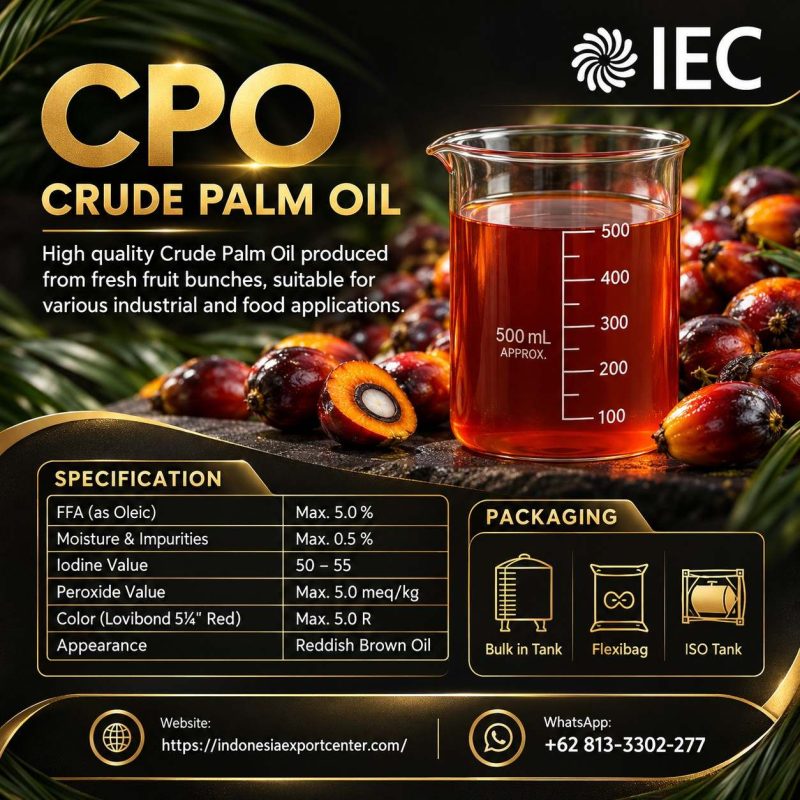
| Parameter | Reference Target |
|---|---|
| FFA, as Oleic | Max. 5.0% |
| Moisture & Impurities | Max. 0.5% |
| Iodine Value | 50–55 |
| Peroxide Value | Max. 5.0 meq/kg |
| Color, Lovibond 5¼-inch Red | Max. 5.0 R |
| Appearance | Reddish Brown Oil |
These figures are marketing reference targets, not verified shipment results.
Flexibag Versus ISO Tank Versus Bulk Vessel
| Transport Option | Key Feasibility Considerations |
|---|---|
| Flexibag | Cargo approval, material compatibility, heating restrictions, carrier acceptance |
| ISO Tank | Tank specification, heating equipment, payload, cleaning, operator approval |
| Bulk Vessel | Vessel suitability, tank condition, loading terminal, discharge infrastructure |
The best option depends on the actual cargo, quantity, route, and receiving facilities.
When Flexibag Shipping May Be Inappropriate
Flexibag shipping should not proceed where:
- The manufacturer does not approve the cargo.
- The carrier refuses the product or system.
- Required heating cannot be performed safely.
- The receiving facility cannot discharge the cargo.
- Packaging compatibility is not established.
- Payload restrictions cannot be met.
- Insurance or regulatory requirements are unresolved.
In such cases, buyers should investigate an approved alternative.
Commercial Cost Considerations
A flexibag cost assessment may include:
- Flexibag system.
- Installation.
- Freight container.
- Loading equipment.
- Approved heating arrangements where applicable.
- Ocean freight.
- Insurance.
- Discharge services.
- Waste handling and disposal.
- Inspection.
- Destination charges.
The cost comparison should consider total delivered cost and operational risk.
Flexibag CPO Inquiry Workflow
Buyer Inquiry → Cargo Technical Review → Flexibag Manufacturer Approval → Carrier Approval → Loading and Discharge Assessment → Commercial Quotation → Shipment Decision
A shipment should not be booked before the relevant approvals are confirmed.
Flexibag Feasibility RFQ Template
Subject: Indonesian CPO Flexibag Shipping Feasibility Inquiry
Company: [Name]
Country: [Country]
Product: Crude Palm Oil
Quality Specification: [Details]
Quantity: [MT]
Loading Location: [Location]
Destination: [Port and Country]
Expected Transit Period: [Details]
Cargo Temperature Requirements: [To Be Confirmed]
Flexibag System: [If Known]
Carrier Approval: [Required]
Destination Discharge Capability: [Details]
Preferred Incoterm: [Term]
Please advise whether a technically approved flexibag arrangement is available for the proposed cargo and route, together with the required documentation and quotation.
Frequently Asked Questions
Is crude palm oil always suitable for flexibag shipping?
No. Suitability must be established for the specific cargo, equipment, and route.
Can every flexibag be heated?
No. Heating compatibility depends on the approved system.
Can IEC guarantee carrier acceptance?
No. The carrier must approve the shipment.
Is flexibag shipping always cheaper?
No. Total cost and risk depend on the actual logistics arrangement.
Can flexibags replace ISO tanks for every CPO shipment?
No. They have different technical and operational requirements.
What if the shipping line refuses CPO in a flexibag?
An approved alternative, such as a suitable ISO tank or bulk vessel arrangement, should be evaluated.
Does a brochure listing flexibags prove shipment feasibility?
No. It only identifies a proposed option that requires verification.
Request CPO Flexibag Shipping Feasibility Information
Investigate containerized CPO shipping with proper cargo compatibility, temperature management, and carrier approvals.
REQUEST FLEXIBAG CPO FEASIBILITY INFORMATION
IEC | INDONESIA EXPORT CENTER
Website: https://indonesiaexportcenter.com/
WhatsApp Inquiry: +62 821-4172-3508
Related Resources
Crude Palm Oil ISO Tank Feasibility
Crude Palm Oil Bulk Tank Storage and Handling
Crude Palm Oil Bulk Vessel Shipment Guide
