

IEC | INDONESIA EXPORT CENTER
Your Global Sourcing Partner
Managing Crude Palm Oil Discharge at the Destination Port
The arrival of a crude palm oil shipment is not the end of the procurement process.
Before the cargo can be transferred into receiving storage, the buyer and terminal operator must coordinate documentation, vessel access, tank availability, transfer equipment, safety procedures, and quality verification.
A structured discharge and receiving checklist helps refinery operators, importers, and logistics teams identify the activities that should be confirmed before cargo transfer begins.
Indonesia Export Center (IEC) facilitates international sourcing inquiries involving potential Indonesian CPO suppliers. IEC does not operate destination terminals or guarantee discharge performance.
Why Receiving Procedures Matter
Poorly coordinated discharge operations may lead to:
- Shipment delays.
- Unexpected terminal costs.
- Quantity discrepancies.
- Product contamination.
- Quality deterioration.
- Equipment problems.
- Incomplete documentation.
- Contractual disputes.
A defined receiving procedure helps the relevant parties establish responsibilities and acceptance criteria.
1. Review Pre-Arrival Documents
Before the vessel arrives, the receiving team should review applicable documents.
These may include:
- Bill of lading.
- Commercial invoice.
- Cargo manifest.
- Certificate of Analysis.
- Quantity records.
- Vessel information.
- Insurance documents.
- Inspection reports.
- Customs documentation.
- Terminal instructions.
The required list depends on the shipment and destination.
2. Confirm Receiving Tank Availability
The receiving terminal should verify that the designated tanks have sufficient usable capacity.
Important considerations include:
- Existing inventory.
- Available tank space.
- Tank compatibility.
- Cleaning status.
- Product segregation.
- Heating systems.
- Level measurement.
- Safety requirements.
3. Confirm Vessel and Berth Compatibility
Before berthing, the responsible parties should assess:
- Vessel dimensions.
- Berth restrictions.
- Cargo manifold compatibility.
- Transfer connections.
- Pumping arrangements.
- Emergency procedures.
- Communication protocols.
4. Review Temperature and Heating Requirements
CPO can change its physical behavior as temperature changes.
Inappropriate temperature management may complicate pumping, discharge, or storage.
The terminal and vessel operator should determine suitable temperature conditions using the cargo’s characteristics, equipment limitations, and approved procedures.
No universal heating temperature is specified here.
5. Inspect Receiving Equipment
Relevant equipment may include:
- Shore pipelines.
- Transfer hoses.
- Valves.
- Pumps.
- Tank level instruments.
- Temperature sensors.
- Heating systems.
- Emergency shutdown arrangements.
Only authorized personnel should conduct operational checks and transfer activities.
6. Arrange Quality Sampling
The receiving procedure may include:
- Pre-discharge samples.
- Vessel tank samples.
- Transfer samples.
- Receiving tank samples.
- Retained samples.
The sampling plan should follow agreed procedures.
7. Verify Quality Parameters
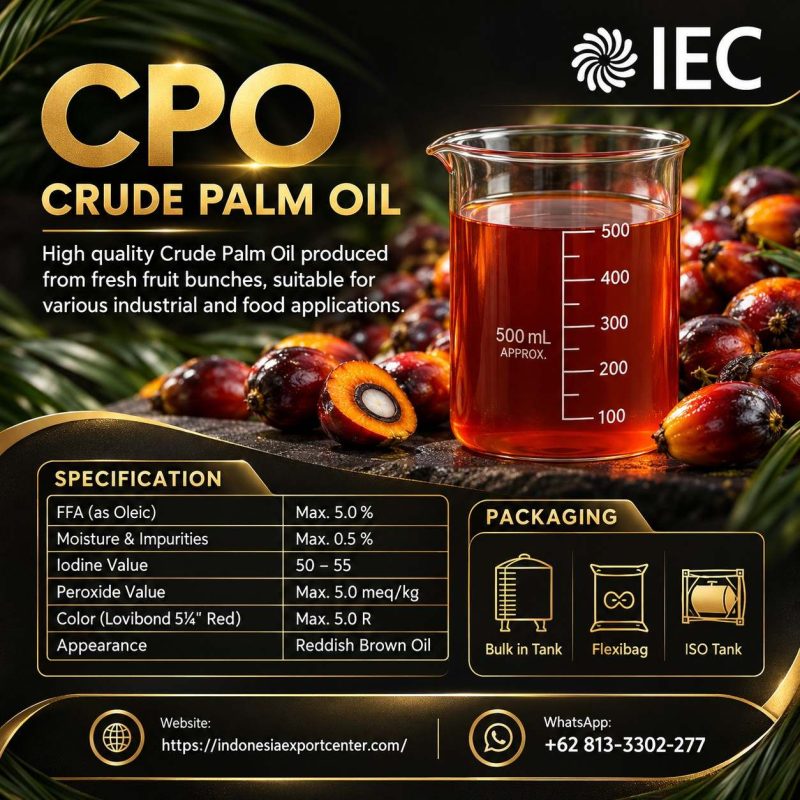
IEC’s supplied reference specification includes:
| Parameter | Reference Target |
|---|---|
| FFA, as Oleic | Maximum 5.0% |
| Moisture & Impurities | Maximum 0.5% |
| Iodine Value | 50–55 |
| Peroxide Value | Maximum 5.0 meq/kg |
| Lovibond Color, 5¼-inch Red | Maximum 5.0 R |
| Appearance | Reddish Brown Oil |
These are reference values only. The actual shipment must be evaluated using agreed analytical methods.
8. Measure Cargo Quantity
Quantity determination may involve:
- Vessel tank measurements.
- Shore tank measurements.
- Product temperature.
- Density.
- Calibration data.
- Agreed corrections.
- Transfer records.
The settlement method should be defined in the contract.
9. Understand Ullage
Ullage is the measured space between the liquid surface and a defined tank reference point.
Ullage measurements may contribute to quantity calculations when used with appropriate tank calibration information.
Measurement procedures must follow applicable operational standards.
10. Monitor Cargo Transfer
The responsible operators should follow approved procedures and monitor relevant conditions throughout discharge.
These may include:
- Transfer rate.
- Tank levels.
- Equipment condition.
- Temperature.
- Pressure.
- Communications.
- Abnormal conditions.
This guide is a planning checklist, not an operating procedure for hazardous or industrial equipment.
11. Reconcile Discharged Quantity
After transfer, the buyer may compare:
- Bill of lading quantity.
- Vessel discharge measurements.
- Shore receiving measurements.
- Contractual tolerances.
- Relevant measurement uncertainty.
Any discrepancy should be documented and reviewed under the agreed contractual procedure.
12. Complete Receiving Documentation
The receiving file may contain:
- Discharge report.
- Quantity survey.
- Quality test results.
- Sample records.
- Tank measurements.
- Transfer records.
- Incident reports where applicable.
- Customs release information.
- Final receiving acknowledgment.
Complete CPO Discharge Checklist
| Stage | Check |
|---|---|
| Pre-Arrival | Shipping documents reviewed |
| Terminal | Berth confirmed |
| Storage | Receiving tank capacity verified |
| Compatibility | Vessel and equipment accepted |
| Temperature | Handling conditions agreed |
| Inspection | Surveyor and sampling plan confirmed |
| Quality | Laboratory requirements established |
| Quantity | Measurement procedure agreed |
| Discharge | Transfer conducted under approved procedures |
| Reconciliation | Quantities compared |
| Documentation | Reports completed |
| Acceptance | Contractual requirements reviewed |
Common Discharge Problems
Potential issues include:
- Insufficient receiving capacity.
- Equipment incompatibility.
- Unexpected cargo condition.
- Documentation delays.
- Quality discrepancies.
- Measurement differences.
- Terminal congestion.
- Unclear responsibility for additional costs.
Receiving Requirements for CPO RFQ
Subject: Indonesian CPO Supply – Destination Discharge Requirements
Company: [Name]
Country: [Country]
Product: Crude Palm Oil
Quantity: [MT]
Destination Port: [Port]
Receiving Terminal: [If Known]
Available Storage Capacity: [MT]
Preferred Incoterm: [Term]
Quality Requirements: [Details]
Discharge Inspection: [Required / Not Required]
Special Handling Requirements: [Details]
Shipment Period: [Dates]
Please advise on potential Indonesian suppliers and whether the proposed cargo and shipping arrangements are compatible with the destination requirements.
Frequently Asked Questions
Who is responsible for CPO discharge?
Responsibilities depend on the sale contract, carriage contract, and terminal arrangements.
Is shore tank measurement always the final quantity basis?
Not necessarily. The contract should specify the agreed settlement method.
Can discharge quality differ from loading quality?
Differences may arise from sampling, measurement, handling, or actual cargo changes and require investigation.
Should receiving tanks be inspected?
Tank suitability and condition should be addressed by the responsible terminal operator.
Does CIF automatically include unloading costs?
Not necessarily. Cost allocation depends on the carriage contract and applicable Incoterms provisions.
Does IEC provide terminal discharge services?
No. IEC facilitates sourcing inquiries.
Request CPO Supply for Your Receiving Terminal
Communicate your discharge capacity, quality specifications, and destination requirements before arranging an Indonesian CPO purchase.
REQUEST CPO IMPORT SOURCING INFORMATION
IEC | INDONESIA EXPORT CENTER
Website: https://indonesiaexportcenter.com/
WhatsApp Inquiry: +62 821-4172-3508
Related Resources
Crude Palm Oil Bulk Tank Storage and Handling
CPO Independent Surveyor Inspection Guide
