

IEC | INDONESIA EXPORT CENTER
Your Global Sourcing Partner
BULK CPO EXPORT LOGISTICS
Loading Port Selection | Terminal Coordination | Cargo Readiness | Vessel Planning | Export Documentation
Planning Crude Palm Oil Shipments from Indonesia
Successful international crude palm oil procurement requires coordination between the seller, exporter, storage terminal, freight provider, vessel operator, inspection company, and overseas buyer.
Even when the commercial terms have been agreed, a shipment can be delayed if the cargo is not ready, the loading terminal is unsuitable, the nominated vessel is incompatible, or the required documentation is incomplete.
For bulk commodity buyers, loading port and export logistics planning should begin before the purchase contract is finalized.
Indonesia Export Center (IEC) facilitates sourcing inquiries involving potential Indonesian CPO suppliers and helps buyers communicate logistics requirements.
Actual loading locations, port access, terminal capacity, cargo availability, and shipping schedules must be confirmed by the responsible commercial and operational parties.
Why Loading Port Planning Matters
The loading port influences:
- Inland cargo transportation.
- Storage arrangements.
- Vessel access.
- Loading costs.
- Freight calculations.
- Shipment schedules.
- Inspection arrangements.
- Customs procedures.
- Cargo handling risks.
A quotation that does not identify a feasible loading location may be difficult to evaluate accurately.
1. Confirm the Actual Cargo Location
Before selecting a port, establish where the proposed CPO cargo is physically located.
Relevant information includes:
- Storage terminal.
- Tank identification.
- Available quantity.
- Cargo readiness.
- Product specification.
- Transfer arrangements.
- Access restrictions.
Do not assume that a supplier’s registered business address is the same as the cargo’s storage location.
2. Evaluate Loading Port Suitability
A loading port must be suitable for the proposed vessel and cargo operation.
Important factors may include:
| Port Factor | Planning Question |
|---|---|
| Water Depth | Can the vessel safely access the berth? |
| Berth Availability | Is a suitable loading slot available? |
| Cargo Handling | Are pumps and transfer systems appropriate? |
| Storage | Is the required cargo quantity accessible? |
| Heating | Are suitable temperature controls available? |
| Customs | Can applicable export procedures be completed? |
| Inspection | Can surveyors access the operation? |
| Safety | Are relevant operating procedures established? |
The terminal and vessel operator should confirm operational feasibility.
3. Select the Shipping Arrangement
CPO may be shipped using different transport systems, subject to technical and commercial suitability.
Bulk Liquid Vessel
Potentially relevant for larger bulk liquid movements where suitable terminals and vessels are available.
ISO Tank
May be considered for certain containerized liquid cargo arrangements, subject to equipment, heating, payload, and carrier approval.
Flexibag
Requires particular technical evaluation and explicit carrier, equipment, and cargo compatibility approval. Flexibags should not be assumed universally suitable for CPO.
4. Understand Vessel Nomination
Vessel nomination identifies the vessel proposed for a shipment.
Depending on the contract, nomination information may include:
- Vessel name.
- Vessel particulars.
- Estimated arrival.
- Cargo capacity.
- Tank suitability.
- Loading instructions.
- Required certificates.
- Relevant terminal restrictions.
The responsibility for arranging the vessel depends on the agreed trade terms.
5. Coordinate Cargo Readiness
Before vessel arrival, the responsible parties should confirm:
- Contracted quantity.
- Storage location.
- Cargo availability.
- Quality documentation.
- Loading equipment.
- Export eligibility.
- Inspection arrangements.
- Terminal acceptance.
- Relevant operational instructions.
Cargo readiness should be based on actual confirmation, not an unverified marketing claim.
6. Confirm CPO Technical Specifications
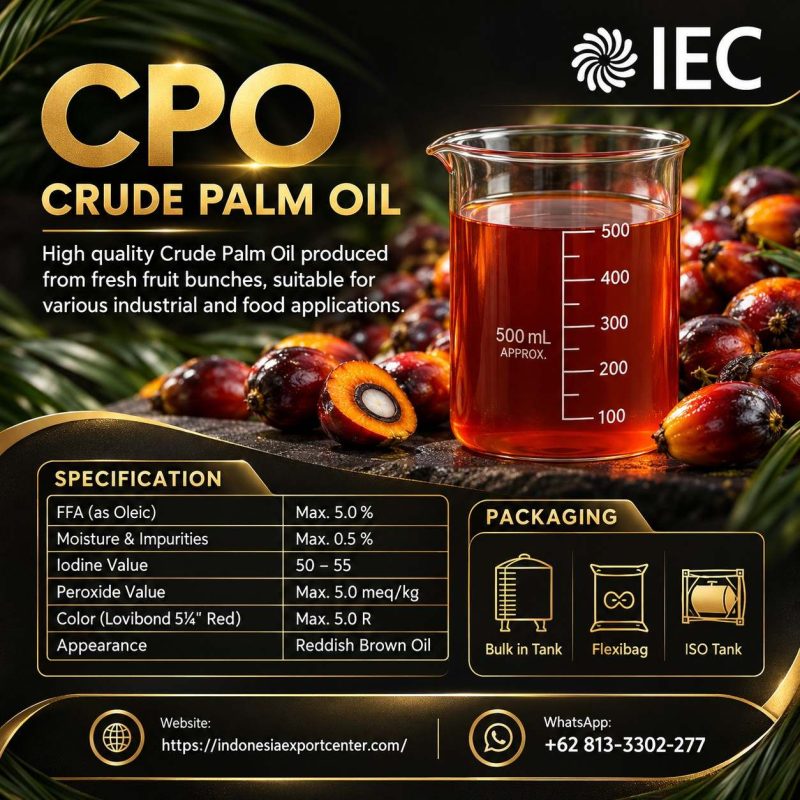
The IEC product reference lists:
| Parameter | Reference Target |
|---|---|
| FFA, as Oleic | Max. 5.0% |
| Moisture & Impurities | Max. 0.5% |
| Iodine Value | 50–55 |
| Peroxide Value | Max. 5.0 meq/kg |
| Lovibond Color, 5¼-inch Red | Max. 5.0 R |
| Appearance | Reddish Brown Oil |
These are reference specifications. A current cargo-specific COA and agreed testing methods are necessary for quality verification.
7. Plan Storage and Transfer
Bulk liquid handling requires attention to storage compatibility, transfer lines, pumping systems, and temperature management.
Operational planning should consider:
- Tank suitability.
- Previous cargo history.
- Product segregation.
- Pumping capacity.
- Heating equipment.
- Contamination prevention.
- Sampling points.
- Quantity measurement.
8. Arrange Loading Inspection
The buyer and seller may agree to independent inspection covering:
- Cargo sampling.
- Laboratory analysis.
- Tank examination.
- Quantity measurement.
- Loading supervision.
- Seal documentation.
- Inspection reporting.
9. Understand Laytime and Demurrage
Bulk vessel contracts may establish allowed loading or discharge time, often referred to as laytime.
Where applicable, delays beyond the agreed allowance may create demurrage exposure.
Buyers should review the charterparty and sale contract to understand:
- Notice of readiness.
- Laytime commencement.
- Allowed loading time.
- Delay responsibility.
- Demurrage provisions.
- Relevant exceptions.
The exact consequences depend on the contract.
10. Prepare Export Documentation
Potential documents include:
- Commercial invoice.
- Bill of lading.
- Certificate of Analysis.
- Certificate of origin where applicable.
- Export customs documentation.
- Inspection certificates where agreed.
- Insurance documentation where required.
- Applicable permits and regulatory records.
The exporter must verify current Indonesian export requirements.
11. Coordinate with the Destination Port
Origin planning should account for destination constraints.
Relevant information may include:
- Discharge terminal.
- Storage capacity.
- Pumping equipment.
- Heating capability.
- Port restrictions.
- Import clearance.
- Receiving inspection.
- Inland delivery arrangements.
12. Loading Logistics Timeline
| Stage | Main Activity |
|---|---|
| Procurement | Agree on product and commercial terms |
| Cargo Verification | Confirm quantity and quality |
| Port Selection | Verify terminal feasibility |
| Freight Planning | Arrange vessel or equipment |
| Inspection | Establish sampling and survey scope |
| Export Compliance | Confirm documentation and approvals |
| Loading | Conduct authorized transfer operation |
| Shipping Documents | Verify cargo and transport records |
| Transit | Monitor shipment milestones |
| Discharge | Coordinate receiving terminal |
Common Logistics Planning Mistakes
- Quoting an unverified loading port.
- Assuming any vessel can carry CPO.
- Ignoring heating requirements.
- Failing to confirm terminal access.
- Overlooking demurrage exposure.
- Omitting cargo inspection.
- Using outdated export requirements.
- Assuming the destination terminal can receive the cargo.
CPO Export Logistics RFQ Template
Subject: Indonesian CPO Loading Port and Export Logistics Inquiry
Company: [Name]
Country: [Country]
Product: Crude Palm Oil
Quantity: [MT]
Preferred Loading Port: [If Known]
Destination Port: [Port, Country]
Preferred Incoterm: [FOB / CFR / CIF]
Shipment Period: [Dates]
Preferred Shipping Method: [Bulk Vessel / Other]
Quality Specifications: [Details]
Independent Inspection: [Required / Not Required]
Special Handling Requirements: [Details]
Please advise on potential suppliers, cargo readiness, feasible loading arrangements, and available commercial terms.
Frequently Asked Questions
Can buyers choose the Indonesian loading port?
The proposed port must be agreed with the seller and confirmed as operationally feasible.
Does IEC guarantee a particular loading terminal?
No. Actual arrangements require supplier and terminal confirmation.
Is a bulk vessel always necessary?
No. The appropriate transport arrangement depends on cargo quantity and technical feasibility.
Who arranges the vessel under FOB?
Under FOB Incoterms 2020, the buyer generally contracts for main carriage.
Can port congestion affect delivery?
Yes. Terminal and vessel schedules can influence shipment timing.
Should inspection occur before loading?
The parties should establish the appropriate inspection scope and timing in their contract.
Request Indonesian CPO Export Logistics Information
Plan your crude palm oil shipment with clearly defined loading arrangements, cargo specifications, freight responsibilities, and export documentation.
REQUEST CPO EXPORT LOGISTICS QUOTATION
IEC | INDONESIA EXPORT CENTER
Website: https://indonesiaexportcenter.com/
WhatsApp Inquiry: +62 821-4172-3508
Related Resources
Crude Palm Oil Bulk Vessel Shipment Guide
CPO FOB Indonesia Purchase Guide
CPO Export Documentation Checklist Indonesia
