

INDONESIA EXPORT CENTER
INTERNATIONAL SEAFOOD FOOD SAFETY PROCUREMENT
FRESH TUNA HISTAMINE TESTING
Yellowfin | Bigeye | Hazard Prevention | Laboratory Testing | HACCP Records | Import Compliance
Fresh Tuna Histamine Testing for International Importers
Histamine is an important food safety hazard in tuna.
International seafood importers should understand how histamine develops, how suppliers control it, and how testing can support product verification.
Indonesia Export Center helps buyers coordinate requests for relevant quality and food safety documentation from potential Indonesian tuna suppliers.
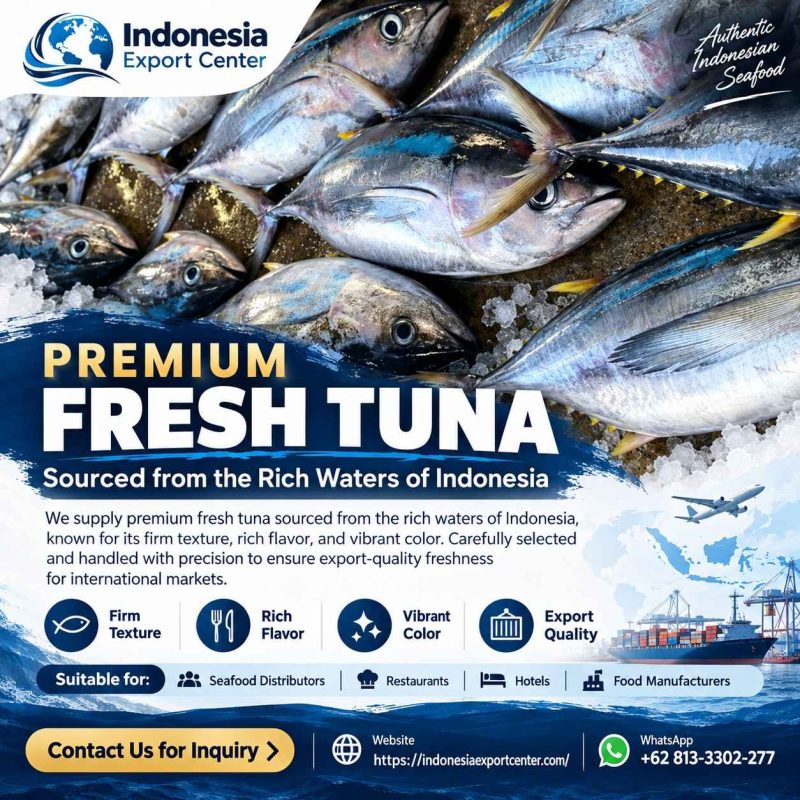
This guide focuses on yellowfin and bigeye tuna in chilled product formats.
1. What Is Histamine?
Histamine is a chemical compound that can develop in certain fish when bacteria convert naturally occurring histidine into histamine.
Inadequate time-temperature control can increase the risk.
2. Why Tuna Requires Attention
Tuna belongs to a group of fish associated with histamine fish poisoning.
Relevant species include:
- Yellowfin tuna
- Bigeye tuna
3. Histamine Prevention
The most important approach is prevention.
Controls may include:
- Appropriate handling after harvest
- Rapid chilling
- Controlled processing times
- Suitable storage
- Temperature monitoring
- Hygienic handling
4. Can Histamine Be Removed?
Histamine is not reliably eliminated by cooking, freezing, or reheating.
A product with excessive histamine should not be treated as safe merely because it has been cooked.
5. Histamine Testing
Testing may support supplier verification and lot assessment.
However, testing alone cannot replace effective preventive controls.
6. Sampling Plans
A sampling plan should specify:
- Lot definition
- Number of samples
- Sampling locations
- Sample handling
- Test method
- Acceptance criteria
Histamine distribution within a lot may be uneven, making sampling design important.
7. Laboratory Methods
Buyers should confirm that the selected method is appropriate and validated.
Laboratory documentation may include:
- Method identification
- Sample identification
- Results
- Units
- Detection or quantification limits
- Laboratory information
8. Regulatory Limits
Histamine limits and sampling requirements vary by market and product category.
Importers should verify the current rules of their destination country.
No single universal numerical limit should be assumed.
9. HACCP and Histamine
HACCP systems may include controls for:
- Receiving
- Processing
- Storage
- Transportation
- Corrective actions
- Verification
- Recordkeeping
10. Supplier Documentation
Buyers may request:
- HACCP-related records
- Histamine control procedures
- Temperature logs
- Relevant laboratory reports
- Corrective action records
- Traceability
11. Shipment Acceptance
Acceptance criteria should be defined before purchase.
If results exceed applicable limits or agreed specifications, the buyer should follow documented product disposition procedures.
12. Histamine Verification Checklist
| Requirement | Buyer Review |
|---|---|
| Species Identity | Confirmed |
| Lot Identification | Confirmed |
| Temperature Records | Reviewed |
| Histamine Controls | Documented |
| Sampling Plan | Appropriate |
| Test Method | Suitable |
| Results | Reviewed |
| Regulatory Limits | Verified |
| Corrective Actions | Available |
Frequently Asked Questions
Does a passing histamine test guarantee the entire lot is safe?
No. Testing has sampling limitations and must be considered alongside preventive controls.
Can histamine be destroyed by cooking?
No, not reliably.
Are histamine limits the same in every country?
No. Applicable limits and sampling requirements vary.
Can IEC arrange document requests?
IEC can facilitate communication with potential suppliers.
Request Fresh Tuna Safety Documentation
INDONESIA EXPORT CENTER
Histamine Testing | HACCP Documentation | International Seafood Procurement
WhatsApp: +62 813-3302-277
Website: https://indonesiaexportcenter.com/
Page: https://indonesiaexportcenter.com/fresh-tuna-histamine-testing-for-importers/
Submit your species, form, grade, kilograms, destination airport, delivery date, and required testing documentation.
Disclaimer: This guide is informational and does not replace qualified food safety advice. IEC does not certify histamine compliance or guarantee product safety. Buyers must verify applicable regulations and supplier controls.
