

IEC | INDONESIA EXPORT CENTER
HOW TO IMPORT DAMAR BATU FROM INDONESIA
Supplier Verification | Product Sampling | Customs Classification | Export Documentation | International Procurement
Product / Buyer Need
A Step-by-Step Guide for First-Time Damar Batu Importers
Importing natural damar batu from Indonesia requires careful preparation.
International buyers need to identify the correct resin, verify the supplier, evaluate product samples, agree on commercial terms, and comply with the relevant export and import procedures.
Because damar batu is a natural resin traded under commercial names, the buyer should avoid assuming that all products described as damar stone have identical characteristics.
Indonesia Export Center (IEC) facilitates sourcing inquiries for international buyers and helps coordinate preliminary communication with potential Indonesian suppliers.
Step 1 – Define the Product
Before searching for suppliers, determine the exact material required.
Important questions include:
- What is the intended industrial application?
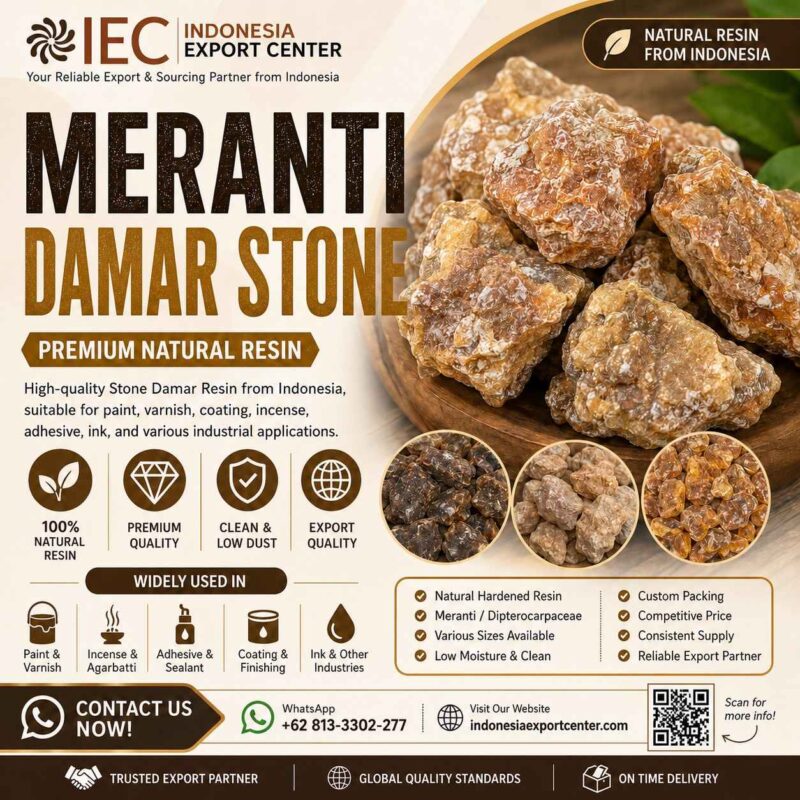
- Is Meranti Damar Stone specifically required?
- Is a botanical identity necessary?
- What lump sizes are acceptable?
- Are there color requirements?
- What moisture and impurity limits apply?
- Is raw or processed resin needed?
A detailed specification reduces sourcing errors.
Step 2 – Identify Potential Suppliers
Potential suppliers may include collectors, aggregators, traders, processors, and exporters.
Each supplier should be evaluated according to its actual role and capability.
Step 3 – Verify Supplier Identity
Request information such as:
- Registered business name.
- Business location.
- Supply-chain role.
- Product origin.
- Current lot information.
- Product photographs.
- Export arrangements.
- Commercial contact details.
For significant transactions, additional due diligence may be appropriate.
Step 4 – Confirm Product Identity
Commercial resin names may be inconsistent.
Buyers should request appropriate evidence of the product’s identity and characteristics.
This may include reference samples, photographs, origin information, or laboratory analysis.
Step 5 – Request Product Samples
A sample may help evaluate:
- Appearance.
- Lump size.
- Moisture.
- Foreign matter.
- Solubility.
- Processing behavior.
- Compatibility with the intended application.
The sample should be linked to an identifiable supplier lot.
Step 6 – Establish Quality Specifications
| Parameter | Buyer Requirement |
|---|---|
| Product | Damar Batu / Meranti Damar Stone |
| Identity | Commercial and botanical, if required |
| Physical Form | Raw resin lumps |
| Lump Size | Defined range |
| Color | Defined tolerance |
| Moisture | Maximum % |
| Foreign Matter | Maximum % |
| Dust / Fines | Maximum % |
| Packaging | Defined |
| Inspection | Agreed procedure |
Step 7 – Validate HS Classification
Natural resins may fall within tariff categories associated with natural gums and resins, but the exact classification depends on the material and its processing state.
HS heading 1301 may be relevant to certain natural gums and resins; this is not a confirmed classification for every product marketed as damar batu.
The importer and exporter should verify the correct national tariff code using the actual product description and applicable customs rules.
Do not assume that a commercial product name is sufficient for customs classification.
Step 8 – Review Export and Import Requirements
Requirements depend on the exporting country, destination country, and product characteristics.
Buyers should determine whether the transaction requires:
- Export declarations.
- Origin documentation.
- Product identification.
- Plant-related or other certificates, where applicable.
- Customs permits.
- Import registrations.
- Safety or chemical documentation.
- Other destination-specific requirements.
The relevant authorities and customs professionals should confirm these obligations.
Step 9 – Obtain a Commercial Quotation
A quotation should identify:
- Product.
- Grade.
- Quantity.
- Unit price.
- Currency.
- Packaging.
- Incoterm.
- Named port.
- Payment terms.
- Lead time.
- Inspection conditions.
- Quotation validity.
Step 10 – Select the Incoterm
Common international trade terms include FOB, CFR, and CIF.
The parties should understand the responsibilities and risk allocation under the selected term.
The actual exporter of record and importer of record must be identified.
Step 11 – Approve the Contract
Before payment, verify:
- Seller identity.
- Bank beneficiary.
- Product specification.
- Approved sample.
- Quantity.
- Inspection rights.
- Delivery schedule.
- Required documents.
- Claims and dispute procedures.
Step 12 – Arrange Inspection
For larger orders, buyers may request inspection before shipment.
The inspection should use agreed sampling and acceptance criteria.
Step 13 – Prepare Shipping Documents
Typical transaction documents may include:
- Commercial invoice.
- Packing list.
- Bill of lading.
- Origin information.
- Export customs documentation.
- Product or inspection certificates where required.
Step 14 – Customs Clearance at Destination
The importer or customs broker should verify:
- Tariff classification.
- Customs valuation.
- Duties and taxes.
- Import permits.
- Product restrictions.
- Required documentation.
- Applicable inspection procedures.
Step 15 – Receive and Inspect the Goods
Upon delivery, the buyer should verify:
- Package count.
- Package condition.
- Net weight.
- Product identity.
- Lot labeling.
- Visible contamination.
- Sample conformity.
- Relevant test results.
Any discrepancy should be documented under the agreed contract procedure.
Common Import Risks
Incorrect Product Identity
The delivered resin may differ from the buyer’s intended material.
Unrepresentative Samples
The approved sample may not represent the commercial lot.
Excessive Foreign Matter
Poor sorting can affect processing yield.
Unclear Export Responsibilities
The buyer may not know which party is legally exporting the goods.
Incomplete Documentation
Missing or inconsistent documents can delay customs clearance.
Unverified Shipment Timing
A supplier’s informal estimate may not reflect actual logistics availability.
IEC Sourcing Support
IEC may facilitate:
- Supplier identification.
- Product inquiries.
- Lot evidence requests.
- Sample coordination.
- Technical clarification.
- Commercial quotation requests.
- Export-role clarification.
IEC does not replace customs brokers, laboratories, or the legally responsible contracting parties.
Import RFQ Template
Subject: Damar Batu Import from Indonesia
Dear IEC Team,
We are planning to import damar batu resin from Indonesia.
Company: [Name] Destination Country: [Country] Application: [Description] Required Product: [Specification] Lump Size: [Range] Moisture Limit: [%] Impurity Limit: [%] Sample Quantity: [Amount] Initial Order: [MT] Packaging: [Requirement] Destination Port: [Port] Preferred Incoterm: [Term] Required Documents: [Details]
Please advise on potential suppliers, product verification, sample availability, export arrangements, and quotation.
Best regards,
[Name]
Frequently Asked Questions
Can first-time importers source damar batu from Indonesia?
Yes, subject to appropriate supplier qualification and import requirements.
What HS code applies to damar batu?
The exact code requires product-specific classification.
Are samples recommended?
Yes, particularly for industrial applications.
Does IEC handle customs clearance automatically?
No.
Who is the exporter of record?
The responsible exporter must be identified in the transaction.
Can IEC help request export documentation?
IEC can facilitate requests to the relevant supplier or exporter.
Request a Sourcing Quote
START YOUR DAMAR BATU IMPORT INQUIRY
INDONESIA EXPORT CENTER
Your Reliable Export & Sourcing Partner from Indonesia
Website: https://indonesiaexportcenter.com/
WhatsApp: +62 813-3302-277
Related Resources
Indonesian Damar Batu Export Sourcing Service
Damar Batu Manufacturer vs Supplier: Buyer Guide
Meranti Damar Stone Export RFQ Checklist
